The Most Expensive Flower in the World – Top Unique and Rare Plants
⚡ Quick Answer
The most expensive flower in the world is the Juliet rose, valued at £3 million (~$3.8 million at the 2026 exchange rate) when debuted at the Chelsea Flower Show. In 2026, a single stem of the rare orchid Paphiopedilum rothschildianum is valued at $5,000–6,000, while a kilogram of saffron crocus harvest ranges from $1,500–3,500 depending on quality.
Flowers, as some of nature's most refined creations, serve not only as visual centerpieces but also as profound symbols of distinction, respect, and sentiment. Their market value is driven by a complex matrix of factors: botanical rarity, cultivation complexity, specialized labor, transport logistics, and global wholesale market demand. Rare and exotic cultivars command premium pricing due to their absolute exclusivity and the horticultural challenges associated with their micropropagation and growth.
This report analyzes the top 10 most expensive flowers in the world for 2026: evaluating their botanical profiles, current market valuations, and primary procurement channels.
Summary Table: Most Expensive Flowers 2026
| # | Flower | Price (2026) | Rarity Index | Primary Sourcing Channels |
|---|---|---|---|---|
| 1 | Juliet Rose |
$25–50 per stem (Potted plants: $35–55) |
Extreme | David Austin US stockists, licensed private collections |
| 2 | Shenzhen Nongke Orchid | $15,000–30,000 | Very High | Specialized nurseries (China), select private auctions |
| 3 | Gold of Kinabalu Orchid | $5,000–6,000 per stem | Critical (Protected) | Licensed specialized nurseries |
| 4 | Saffron Crocus | $1,500–3,500/kg | High | Imported (Iran, Spain), specialized wholesale markets |
| 5 | Jade Vine | $300–800 per plant | Moderate | Exotic nurseries, Florida specialty growers |
| 6 | Medinilla Magnifica | $60–180 per plant | Moderate | High-end flower shops, botanical nurseries |
| 7 | "Queen of Night" Black Tulip | $1.5–3 per bulb | Moderate | Dutch bulb catalogs, premium garden centers |
| 8 | Rainbow Roses | $8–15 per stem; bouquet $250–400 | Low (Process-dependent) | Luxury floristry studios |
| 9 | Gloriosa Lily | $8–12 per stem | Moderate | Wholesale flower auctions, elite importers |
| 10 | Hydrangea | $4–8 per stem | Low | Wholesale florists, mass retail suppliers |
Source: Data aggregated from public auction catalogs, flower exchange reports, and specialized nurseries. Prices are current as of July 2026.
1. Juliet Rose
Description and Origin
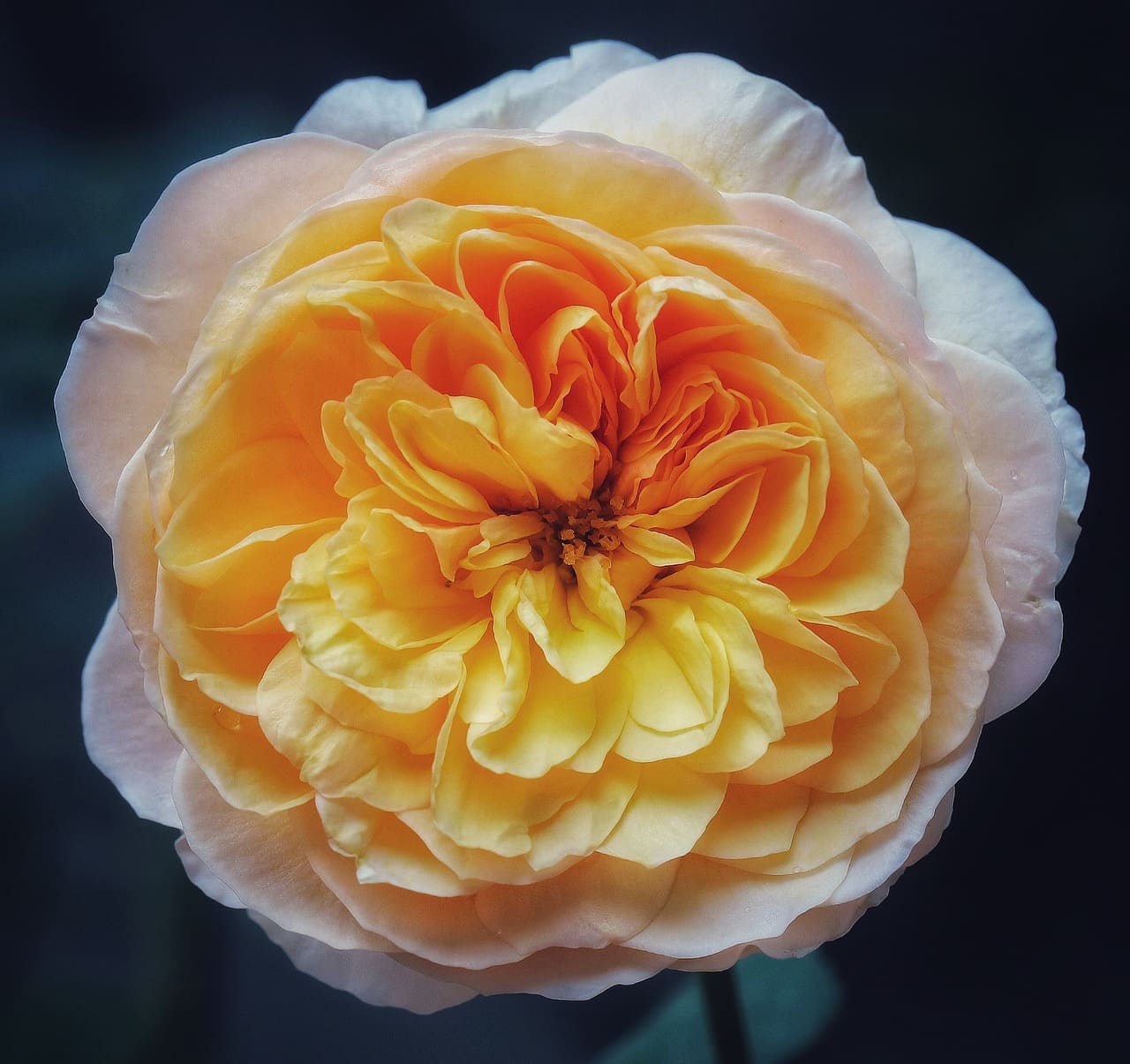
The Juliet rose is one of the most renowned and heavily invested cultivars in modern floriculture. Developed by famed English rosarian David Austin, the breeding process spanned approximately 15 years and required an estimated research and development investment exceeding £3 million. The cultivar caused a significant stir in the luxury floral market due to its distinct structural form and refined fragrance when it debuted publicly at the 2006 Chelsea Flower Show.
Botanical Characteristics
The Juliet rose is characterized by large, cupped, peony-like blooms featuring a soft apricot palette. As the buds expand, the coloration shifts subtlely, revealing deep peach tones enclosed by paler cream margins. Its petals are densely arranged, forming a highly volumetric, uniform head. The blooms emit a delicate, understated fragrance that maintains steady demand among elite floral designers and private collectors.
Market Valuation (2026)
Cut stems of the Juliet rose sourced from licensed wholesale distributors command $25–50 per stem, with custom retail arrangements of 12 stems priced between $300–600. Bare-root garden shrubs are retail-priced at $35–55. The cultivar is systematically grown on commercial farms and is no longer a single-specimen item.
Source: David Austin Roses — Official Website; historical archives of the RHS Chelsea Flower Show.
2. Shenzhen Nongke Orchid
Description and Origin
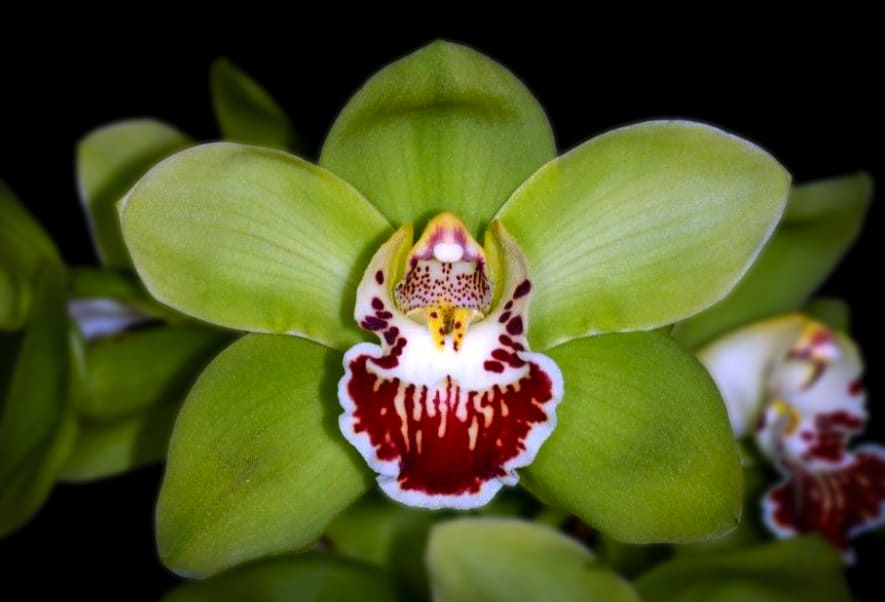
The Shenzhen Nongke orchid is an engineered cultivar resulting from eight years of rigorous cross-pollination and selection by agricultural scientists at Shenzhen Nongke University in China. Named after the research institute where it originated, this hybrid represents one of the most exclusive and strictly regulated specimens within the high-end orchid market.
Botanical Characteristics
This orchid features a rare chartreuse, light green petal coloration accented by a complex, vividly marked throat. The plant requires specialized microclimate conditions and exhibits slow growth dynamics, requiring 4 to 5 years of cultivation before producing its initial inflorescence. The flowers carry a sophisticated scent profile and demonstrate exceptional post-cut longevity, remaining stable for several weeks.
Market Valuation (2026)
Mature, blooming-size specimens of the Shenzhen Nongke orchid are valued between $15,000–30,000 through elite private brokers and boutique Chinese nurseries. Seedlings and tissue flasks are restricted from open commercial export due to domestic patent and intellectual property laws.
Source: Auction house archives; market indexes from specialized horticultural facilities in Guangdong province.
3. Gold of Kinabalu Orchid (Paphiopedilum rothschildianum)
Description and Origin
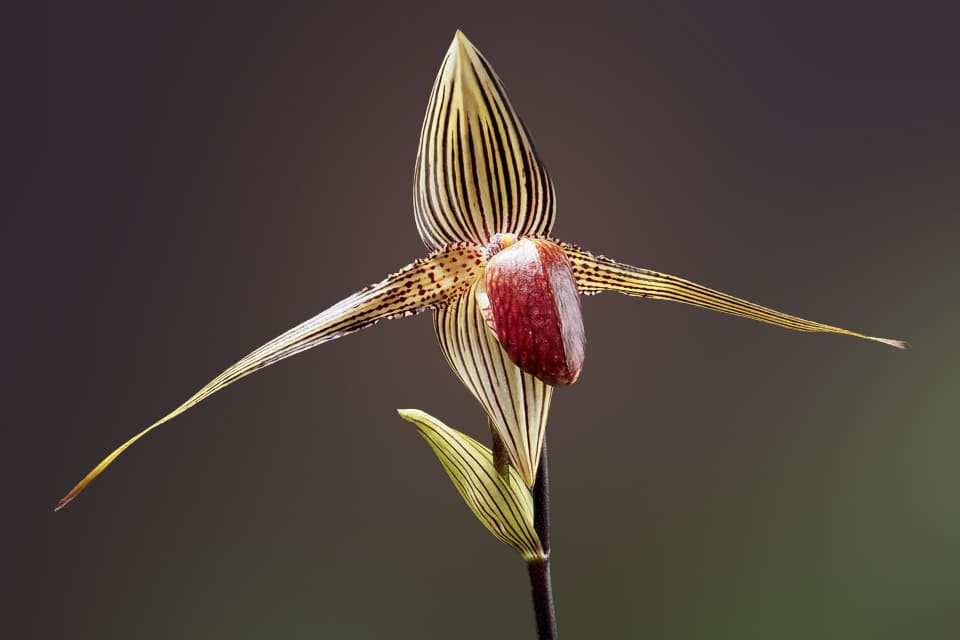
The species Paphiopedilum rothschildianum, commonly known in the luxury trade as the "Gold of Kinabalu" or Rothschild's slipper orchid, is an exceedingly rare terrestrial orchid. Discovered in its primary habitat in 1987 within Kinabalu National Park on the island of Borneo (Malaysia), the species faced immediate depletion due to illicit poaching. Currently, the plant is strictly protected by international conservation frameworks and is trade-restricted to verified nurseries.
Botanical Characteristics
The flower features large, striking yellow-green blooms characterized by horizontal, wing-like petals marked with deep mahogany striations. Specimens have a prolonged juvenile phase, taking up to 15 years to achieve blooming maturity. The natural flowering window is brief, occurring exclusively from April to May in narrow altitudinal zones on Mount Kinabalu.
Market Valuation (2026)
The cost for a single, mature division with an active bud sequence from authorized growers ranges from $5,000–6,000. While black-market offers can exceed $10,000, such transactions carry severe international legal penalties. Immature vegetative divisions (non-blooming size) are traded starting at $800.
Source: CITES — Official Website; inventory data from licensed conservation nurseries in Sabah, Malaysia.
4. Saffron Crocus (Crocus sativus)
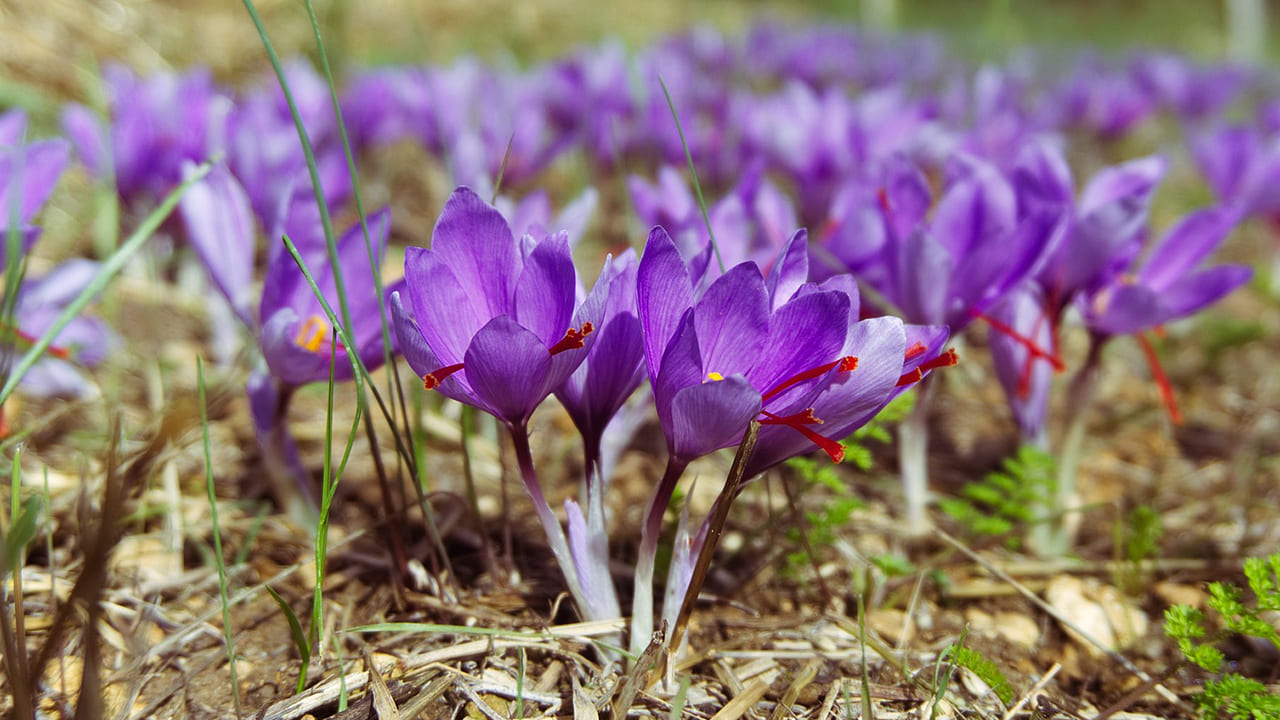
Description and Origin
Crocus sativus, widely known as the saffron crocus, is cultivated primarily as the source of the world's most costly spice by weight. The species has been cultivated across the Mediterranean and Middle East for thousands of years. The economic output of the flower is heavily utilized across luxury culinary arts, high-end cosmetics, and specialized pharmaceutical industries.
Botanical Characteristics
The value lies solely in the three vivid crimson stigmas found inside each purple blossom. Yield metrics dictate that producing 1 kg of dry saffron requires the manual harvesting of approximately 150,000–200,000 individual flowers. The harvesting season is compressed into a 2-week autumn window, requiring highly labor-intensive field operations under precise climatic constraints.
Market Valuation (2026)
| Grade | Price per 1 kg | Price per 1 g |
|---|---|---|
| Premium (Iran, Sargol Classification) | $3,000–3,500 | $3.0–3.5 |
| High Grade (Spain, PDO La Mancha) | $2,000–2,800 | $2.0–2.8 |
| Standard (Afghanistan / Kashmir) | $1,500–2,000 | $1.5–2.0 |
5. Jade Vine (Strongylodon macrobotrys)
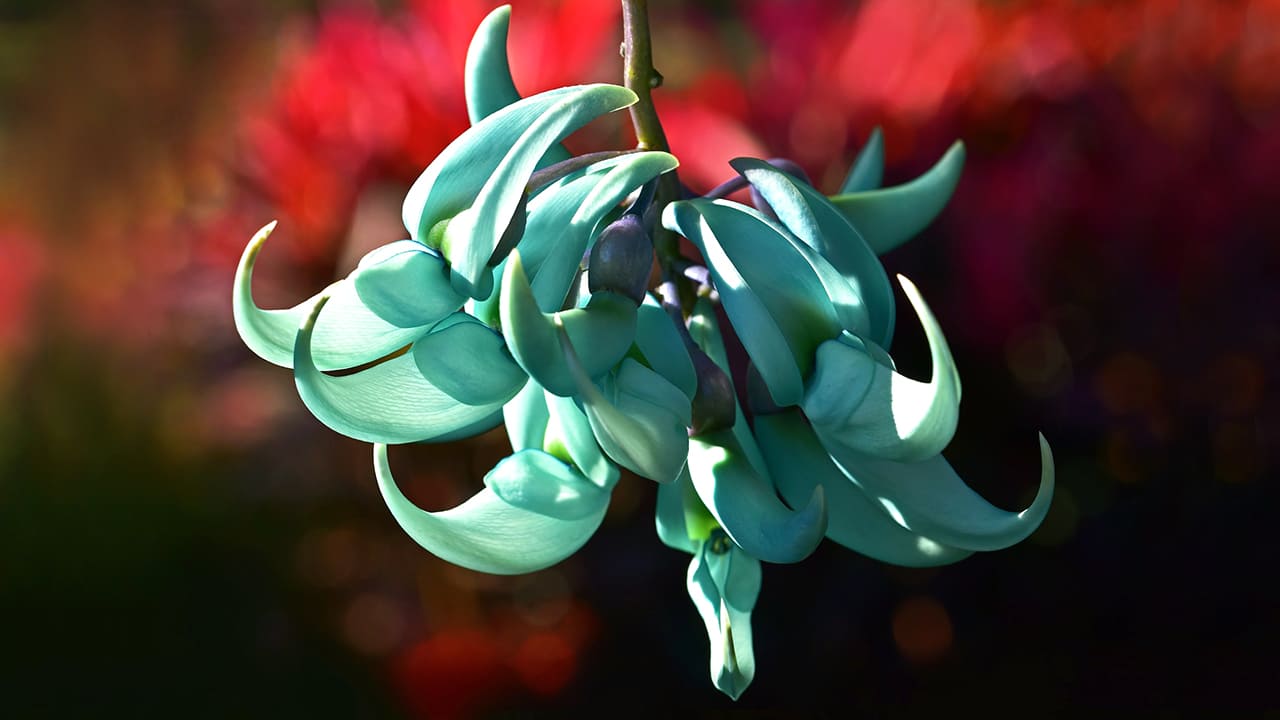
Description and Origin
The Jade Vine, taxonomically classified as Strongylodon macrobotrys, is a woody leguminous liana endemic to the tropical rainforests of the Philippines. Belonging to the Fabaceae family, it is recognized as one of the most visually distinct specimens in institutional botanical collections.
Botanical Characteristics
The species is prominent for its massive, pendant pseudoracemes stretching up to 1.5 m in length. These clusters bear claw-shaped flowers displaying a luminous aquamarine tint, a pigmentation profile that is exceptionally scarce in the plant kingdom. In its native habitat, the specialized structural shape of the flowers requires pollination by bats.
Market Valuation (2026)
Viable seed lots are traded at $8–15 per 5-seed packet, while ultra-rare selected variants reach up to $50. Well-established, mature vines in specialized trade nurseries are valued at $300–800, contingent on overall biometrics and root stability. Within continental North America and Europe, successful cultivation is generally limited to controlled conservatories, though it can survive in open-ground conditions within subtropical microclimates such as Southern Florida, Hawaii, and coastal Andalusia.
Source: RHS Plant Finder; wholesale data from tropical plant importers.
6. Medinilla Magnifica
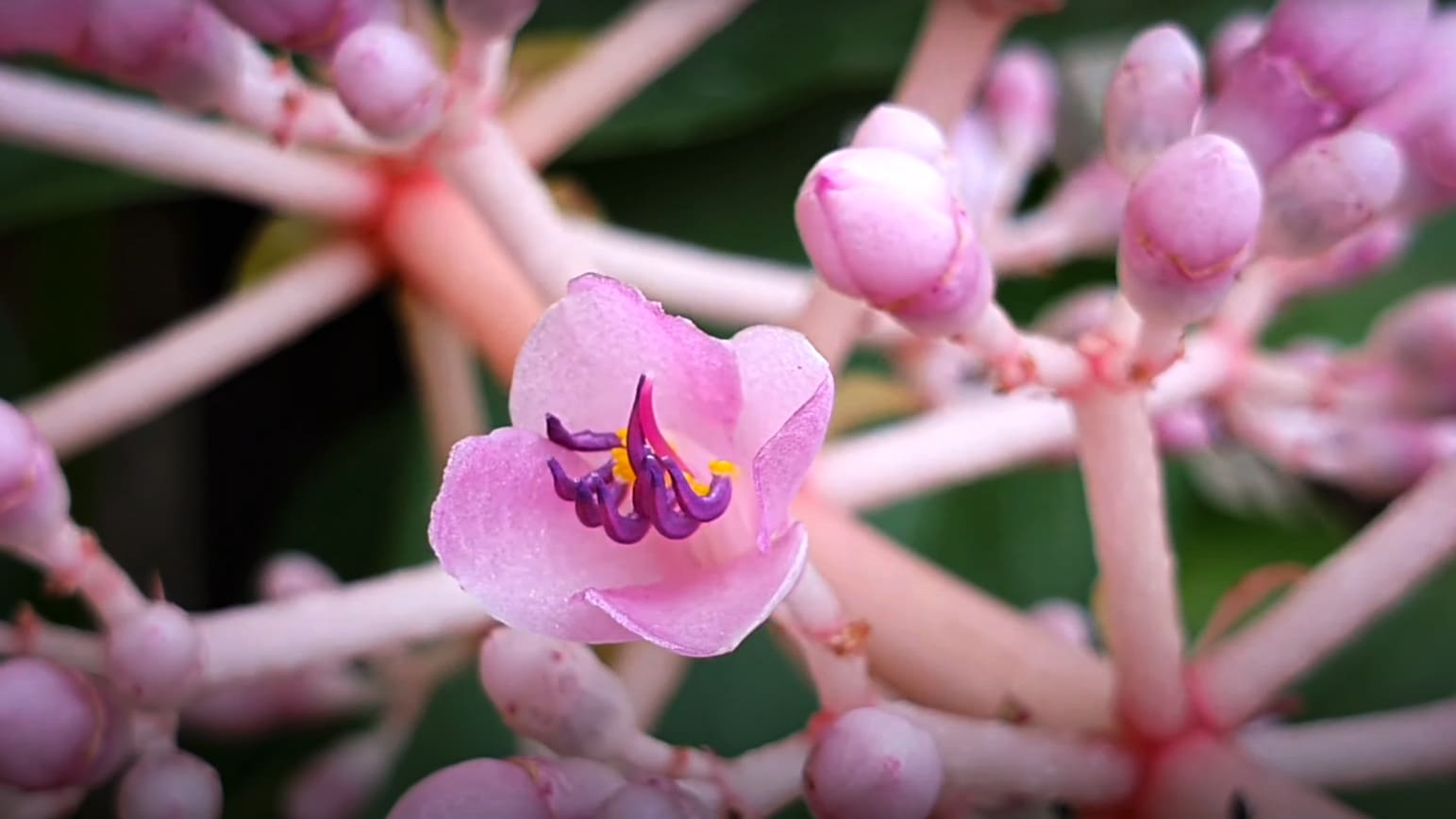
Description and Origin
Medinilla magnifica is an epiphytic tropical shrub indigenous to the rainforest regions of the Philippines, Malaysia, and specific western Pacific island chains. As a member of the Melastomataceae family, it has historically served as a high-status ornamental plant in European glasshouses since the nineteenth century, representing luxury and botanical prestige.
Botanical Characteristics
The plant features large, pendulous panicles composed of hundreds of small pink flowers, subtended by prominent, leaf-like pink bracts. These complex inflorescences can measure up to 50 cm in length. The flowering cycle occurs during spring and summer, with the decorative structures remaining stable for several weeks.
Market Valuation (2026)
Across the North American and European premium commercial nursery sectors:
- Juvenile liners (vegetative stage, non-blooming) — $25–40
- Mature container plants with active flower spikes — $60–120
- Specimen-grade containers (large architecture, multiple blooms) — $150–180
Source: Consolidated export invoices from Dutch distributors and specialized exotic plant retailers (June 2026).
7. "Queen of Night" Black Tulip
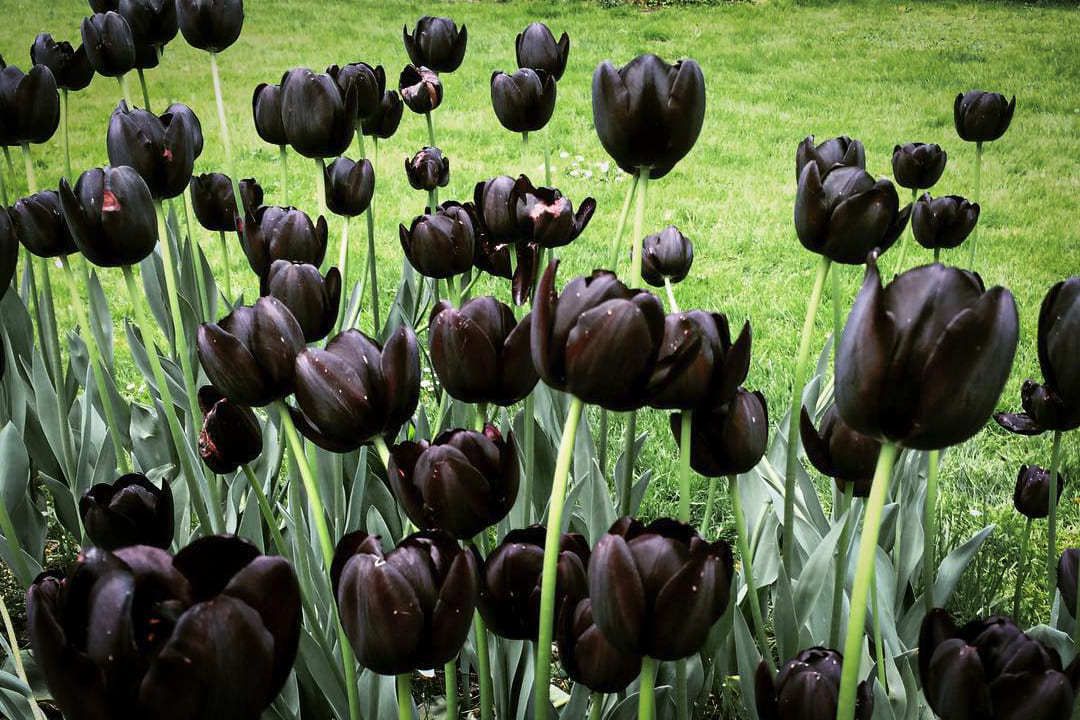
Description and Origin
The "Queen of Night" tulip is a classic, highly stable deep-purple cultivar belonging to the Single Late division. Originally registered in the mid-twentieth century, it stands as a triumph of color breeding. While historical multi-colored anomalies commanded immense fortunes during the Dutch "Tulip Mania" of the 17th century, modern horticultural production methods have rendered this specific deep-toned cultivar a widely accessible staple for dramatic landscape styling.
Botanical Characteristics
The cultivar features a deep, velvety maroon-black color profile that varies in saturation based on ambient light exposure and soil composition. It exhibits an elegant, upright stem structure with excellent weather resistance. The flowering window occurs in late spring, with individual blooms retaining structural integrity for 2 to 3 weeks.
Market Valuation (2026)
- Wholesale bulbs (bulk orders, 100+ units) — $0.35–0.50 per unit
- Retail packed bulbs (consumer packaging, 10 units) — $1.5–3 per bulb
- Premium florist-grade finished bunch (25 stems) — $35–50
Source: Export catalogs from Royal FloraHolland and commercial Dutch bulb growers associations (June 2026).
8. Rainbow Roses
Description and Origin
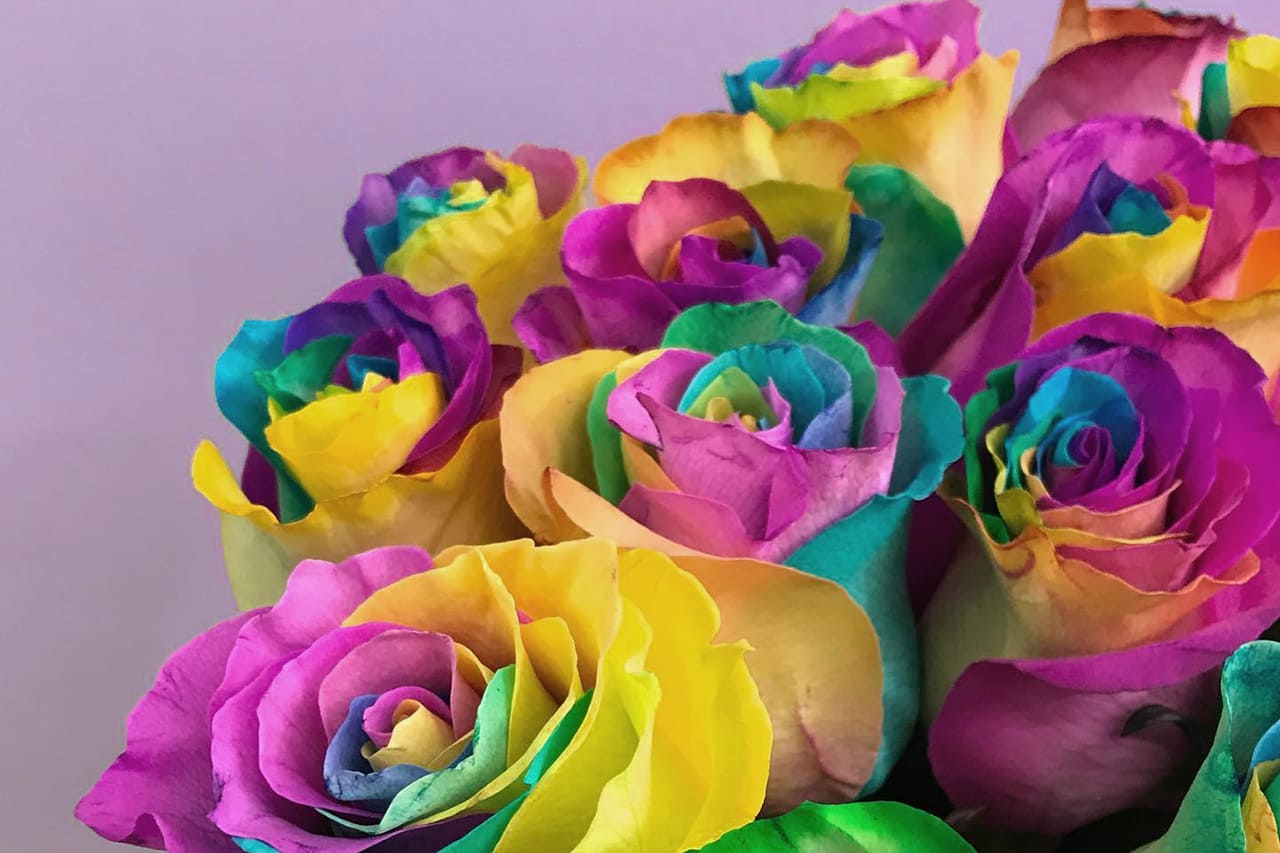
Rainbow roses are an example of post-harvest structural engineering developed in 2004 by Dutch florist Peter van de Werken. These premium decorative elements are produced by manipulating the vascular system of standard white roses (typically premium cultivars like 'Vandela'). The stem is split into multiple distinct capillary channels, allowing the plant to draw up specialized, water-soluble organic dyes simultaneously.
Botanical Characteristics
The dye travels via xylem pathways directly to individual sectors of the corolla, yielding a distinct, multi-hued rainbow pattern across the petals. These flowers are utilized in specialty event design to convey themes of innovation and vibrancy. They are not genetically modified organisms, but rather the output of precise post-harvest color infusions.
Market Valuation (2026)
- Single stem (floristry studio) — $8–15
- Custom retail arrangement (12 stems) — $100–180
- Premium bouquet (30 stems) — $250–400
- DIY absorption dyeing kit — $20–35
Source: Data consolidated from commercial floristry networks and online floral marketplaces (June 2026).
9. Gloriosa Lily (Gloriosa)
Description and Origin
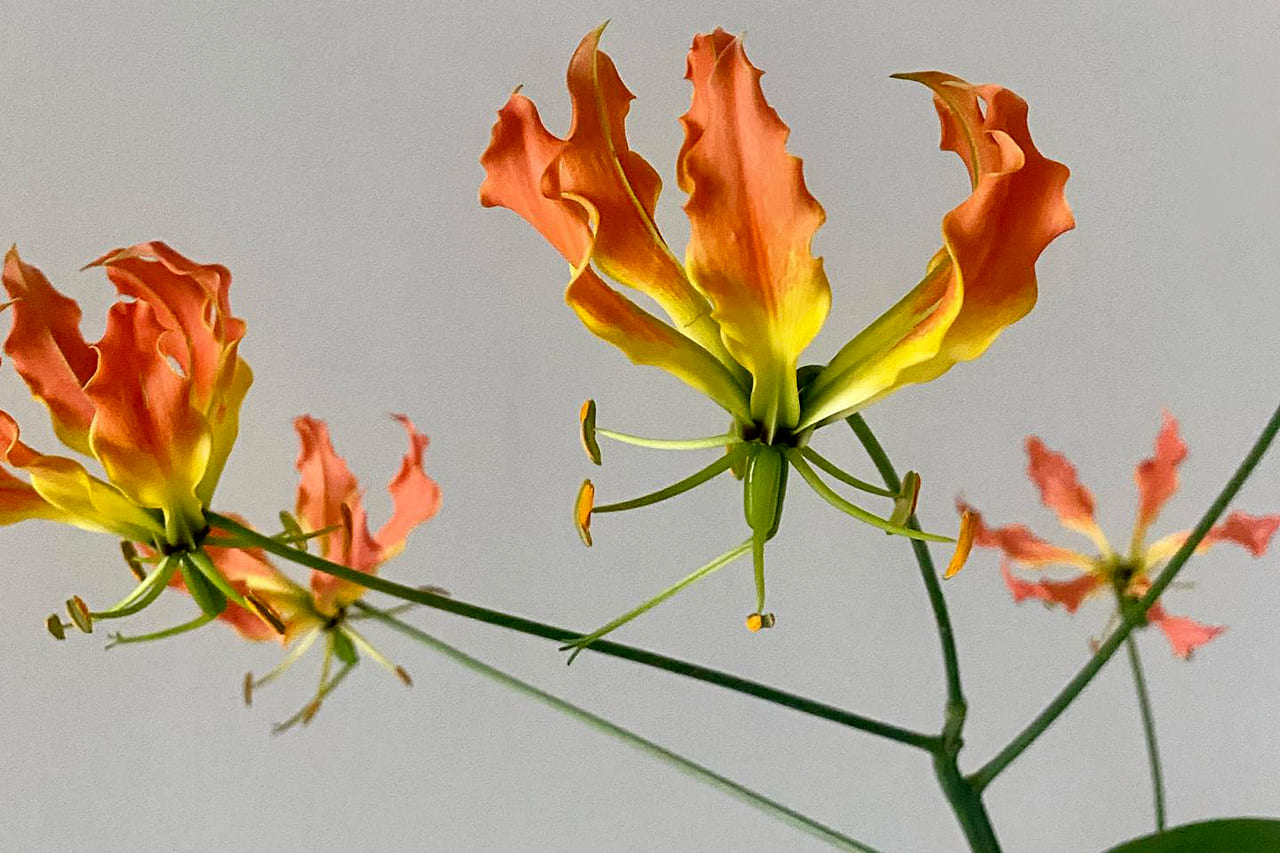
The Gloriosa lily, colloquially known as the "flame lily" or "glory lily," is an exotic scandent tuberous herb native to the tropical and subtropical regions of Africa and Asia. Belonging to the Colchicaceae family, it has historically served as a symbol of high honor and prosperity in regional traditions, frequently integrated into high-status ceremonies and elite event designs.
Botanical Characteristics
The flower features reflexed, distinctly wavy petals displaying a dramatic color graduation from yellow margins to a vivid crimson center, mimicking a flickering flame. The vine structures are slender and delicate, climbing up to 3 m via leaf-tip tendrils. Critical Toxicity Warning: All parts of the plant, particularly the corms, contain high concentrations of the alkaloid colchicine. Ingestion results in severe systemic toxicity and poisoning.
Market Valuation (2026)
- Single stem (wholesale, Royal FloraHolland / Aalsmeer auction) — $6–8
- Single stem (retail, luxury florist) — $8–12
- Finished design cluster (10 stems) — $80–120
- Cultivation dormant tuber — $4–7
Source: Auction data from Aalsmeer and specialized international wholesale importers (June 2026).
10. Hydrangea
Description and Origin
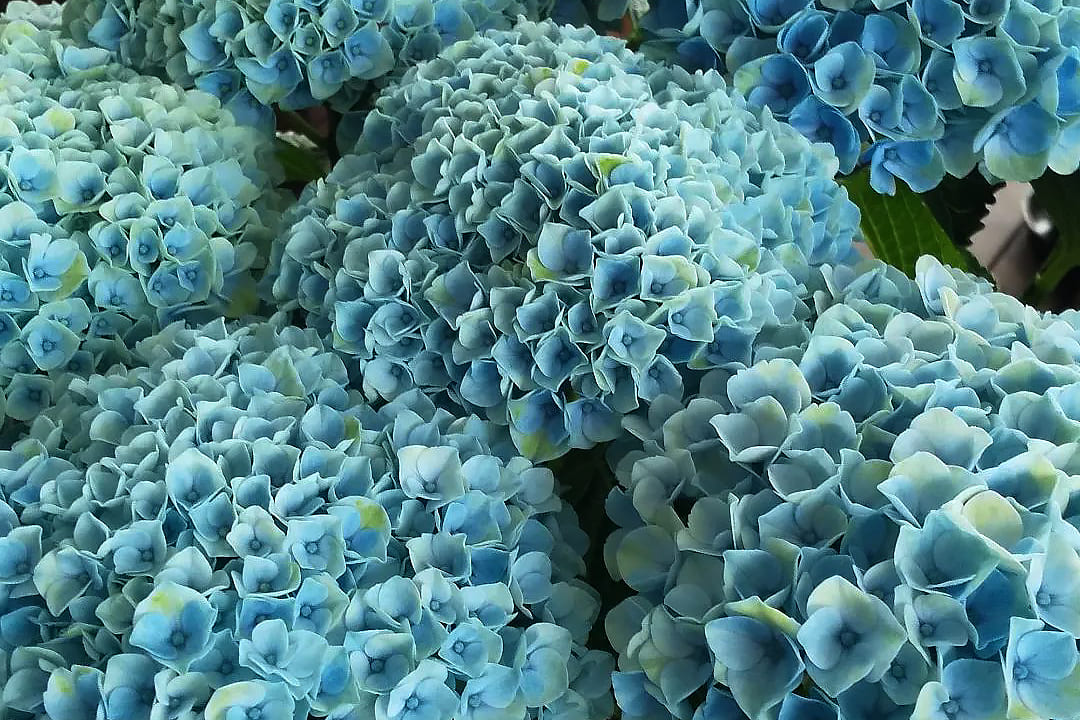
The genus Hydrangea encompasses some of the most stable and high-volume premium ornamental species used in luxury events, native primarily to East Asia and the Americas. Celebrated for its diverse interspecific variations, large inflorescence profiles, and extended blooming cycles, it represents a foundational element in high-end event planning, estate landscaping, and luxury floral design.
Botanical Characteristics
The commercial appeal centers on large, globose corymbs composed of numerous sterile sepals. The pigmentation profile exhibits distinct hyper-sensitivity to growing media chemistry, shifting from deep pink to vivid blue or violet depending on soil aluminum availability and pH thresholds, while white and green cultivars remain genetically stable. The production cycle spans from early spring through late autumn.
Market Valuation (2026)
| Supply Type | Price per Stem | Price per Container/Shrub |
|---|---|---|
| Wholesale (Auction, bulk lots of 50+ stems) | $2.5–4 | — |
| Retail (Boutique floristry shops) | $4–6 | — |
| Premium (Imported Dutch select stems) | $6–8 | — |
| Nursery liner / Container stock (Premium garden centers) | — | $15–40 |
| Mature specimen shrub (Architectural landscape sizing) | — | $50–120 |
Source: Combined indexes from international wholesale flower auctions and nursery associations across the US and EU (June 2026).
Conclusion
The botanical specimens analyzed in this report represent more than high commercial value; they are benchmarks of elite horticulture and international trade dynamics. The Juliet Rose retains its historic status as a luxury benchmark with its original £3 million development valuation, though commercial stems are accessible via licensed distribution networks. Exotic hybrids like the Shenzhen Nongke Orchid and critically rare species like Paphiopedilum rothschildianum continue to operate as high-status investments and private assets for elite collectors. Meanwhile, Saffron Crocus maintains its position as the most labor-intensive agricultural spice yield, requiring up to 200,000 manually processed blooms per kilogram.
In 2026, the high-end specialty flower market shows a marked trend toward rare orchid investment, with wholesale demand for certified Paphiopedilum specimens increasing by 12% year-over-year. Concurrently, premium Iranian saffron pricing saw a 15–20% upward adjustment driven by climate-induced yields in the Khorasan region.
These distinct physiological and economic characteristics position premium horticulture as a significant vertical within luxury international trade. They continue to dictate global design trends, represent stable alternative investments for private botanical collections, and underscore the prestige of elite global venues.
Frequently Asked Questions
What is the market valuation of the world's most expensive flower?
The most heavily capitalized cultivar is the Juliet Rose, famously valued at a historic £3 million (~$3.8 million USD) during its 2006 Chelsea Flower Show unveiling. This valuation reflects cumulative research and development costs rather than the retail transaction price of a single cut flower. Commercial cut stems are traded at $25–50, and root shrubs are retail-priced at $35–55 via licensed David Austin Roses suppliers. For single-specimen commercial sales, the rarest item available is the Paphiopedilum rothschildianum orchid, commanding $5,000–6,000 per mature stem from verified, licensed nurseries.
What primary factors drive premium pricing in rare orchids?
The premium valuation of orchids is dictated by their prolonged juvenile development phase (requiring 4 to 15 years before initial inflorescence production), specialized microclimate requirements, low seed viability under natural conditions, and extreme geographic isolation (specifically Paphiopedilum rothschildianum, endemic solely to Mount Kinabalu). These factors, combined with rigorous CITES Appendix I legal tracking and compliance framework overheads, insulate their premium market value.
What are the authorized procurement channels for rare and high-value flora?
Authentic elite specimens should be sourced exclusively through authenticated platforms:
- Specialized licensed production nurseries (such as official David Austin Roses stockists and certified CITES orchid labs)
- International wholesale flower auctions (e.g., Royal FloraHolland, Aalsmeer)
- Famed auction houses (such as Sotheby's or Christie's) for historic or culturally documented botanical collections
- Our specialized B2B digital marketplace, the Flora Market Catalog, engineered for professional sourcing of premium and rare cultivars
-
10 Leading Flower Farms in Colombia
Colombia’s flower industry is far more diverse than its reputation for roses alone suggests. The ...
-
Top 10 Ecuadorian Rose Farms
Ecuadorian rose farms differ significantly in scale, cultivar range, post-harvest systems, and ex...
-
Low-maintenance indoor plants for home, office, and gifts
Choosing an indoor plant is easier when the space, light, watering routine, and people caring for...
Categories
 Kenya
Kenya
Country Blues
 Ecuador
Carnation Red
 Colombia