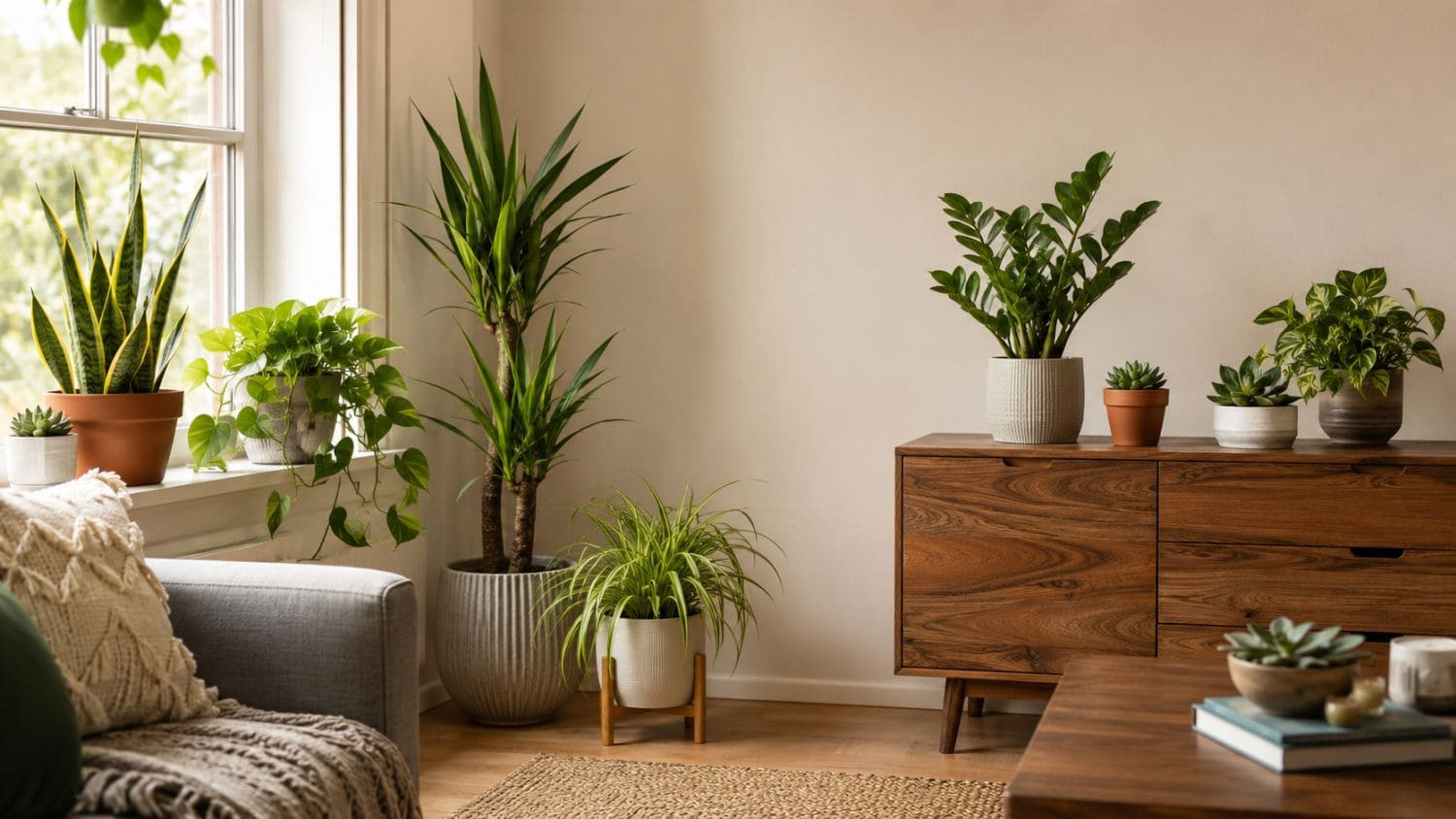
Low-maintenance indoor plants for home, office, and gifts
Indoor plants are often bought in a good mood, but without a clear understanding of where they will stand and who will look after them. In the store, a ZZ plant, snake plant, or peace lily may look strong and trouble-free, but after a month at home, it can start turning yellow, stretching, or dropping leaves. Most often, the problem is not the plant itself, but the wrong expectation: “easy to care for” does not mean “it lives on its own.”
Hardy indoor plants really do forgive mistakes more easily. They can tolerate irregular watering, dry air in an apartment, office weekends without care, or an owner who is not very experienced. But they still need light, a suitable pot, proper soil, moderate temperature, and at least minimal attention. Even the ZZ plant, often described as a plant for busy people, will not grow well in complete darkness or in constantly wet soil.
This article will help you choose a plant for real conditions, not just by photo or name. Greenery for a work desk is one thing; a floor plant for a living room, a gift for someone with no experience, or assortment planning for a flower shop is another. A good choice does not start with the question “which plant is the most indestructible,” but with a more precise one: where will it stand, how much light is there, how often can it be watered, and are there pets at home.
What a “low-maintenance plant” means in practice
Low maintenance does not mean no care
When a plant is described as easy to care for, this usually means it is resistant to common household mistakes. It will not die immediately if watering is missed for a few days, the room air is somewhat dry, and the lighting does not resemble a greenhouse. Such species adapt better to an ordinary apartment, office, or any place where plants are not cared for every day.
But this resilience has limits. A snake plant can survive infrequent watering, but it reacts poorly to constant wetness. A peace lily shows quite quickly when it lacks water, although overall it is not considered a difficult plant. Dracaena can tolerate indirect light, but in a dark corner it gradually loses its shape. That is why the word “low-maintenance” should not be taken literally. It does not cancel care; it simply means a margin of resilience.
For a beginner, it is better to choose plants with clear signals: the soil has dried out — it can be watered; the leaves have lost firmness — conditions should be checked; the stems have stretched — there is not enough light. The easier it is to read the plant’s condition, the lower the risk of damaging it through incorrect care.
What criteria to use when choosing a plant
The first criterion is light. Most indoor plants prefer bright indirect light, but some species tolerate partial shade more calmly: ZZ plant, aglaonema, cast iron plant, snake plant, and pothos. At the same time, no plant is designed to live without light. If the location is very dark, it is better to consider moving the plant or using a grow light in advance.
The second criterion is watering. For those who often forget about plants or travel, species that store moisture in their leaves, stems, or roots are better suited: snake plant, jade plant, aloe, hoya, and ZZ plant. If a person, on the contrary, likes to water frequently, these plants may suffer from overwatering.
The third criterion is size and growth rate. Compact forms are suitable for a work desk; dracaena, monstera, ficus, or a large snake plant are better suited to a living room. In a small apartment, a fast-growing plant can become a problem within a year.
Pets should be considered separately. Some popular indoor plants require caution if there are cats or dogs at home. Safety should be checked by the specific species, not by the general name on the price tag.
Why the same plant can behave differently
The same plant can look completely different under different conditions. A ZZ plant near a window with indirect light will be dense and neat, while in a dark hallway it may almost stop growing. Pothos on a bright shelf will quickly produce long trailing stems, while in the back of the room it will start stretching and losing leaf color intensity. Even the snake plant, often chosen for offices, keeps its shape better where there is at least stable indirect light.
A plant’s condition is affected not only by its location, but also by the season. In winter, soil dries more slowly, there is less light, and growth slows down. Paradoxically, because of hot radiators, the top layer of soil may seem dry after just one day, while at root level it is still a “swamp.” Always check the soil at finger-joint depth, not only on the surface. If you continue watering the plant as often as in summer, even a hardy species can be overwatered. In summer, on the other hand, a windowsill can become hot, and the usual care routine may need to change.
Therefore, the right choice is not about finding the most “unkillable” plant. It is more reliable to choose a species for a specific place: a bright room, an office with air conditioning, a bedroom without direct sun, a kitchen with temperature fluctuations, or a gift for someone who has never kept plants at home before. Then even simple care will work, and the plant will not become an accidental purchase that later has to be rescued.
Best low-maintenance indoor plants for beginners
Snake plant
Snake plant is well suited for a first experience with indoor plants. It has dense, upright leaves, takes up little space, and looks appropriate both at home and in the office. This plant tolerates temporary dryness better than excess water, so the main mistake is watering it too often. Before watering, the soil should dry out noticeably. In a bright location, snake plant grows more densely, but it also tolerates indirect light well.
ZZ plant
ZZ plant is often chosen for busy people, offices, and spaces where plant care is irregular. It stores moisture in tuber-like roots and thick petioles, so it does not require frequent watering. A moderate regime suits it: it is better to let the soil dry out than to keep it constantly moist. In a dark place, the plant will not die immediately, but growth will slow down and new leaves will appear less often.
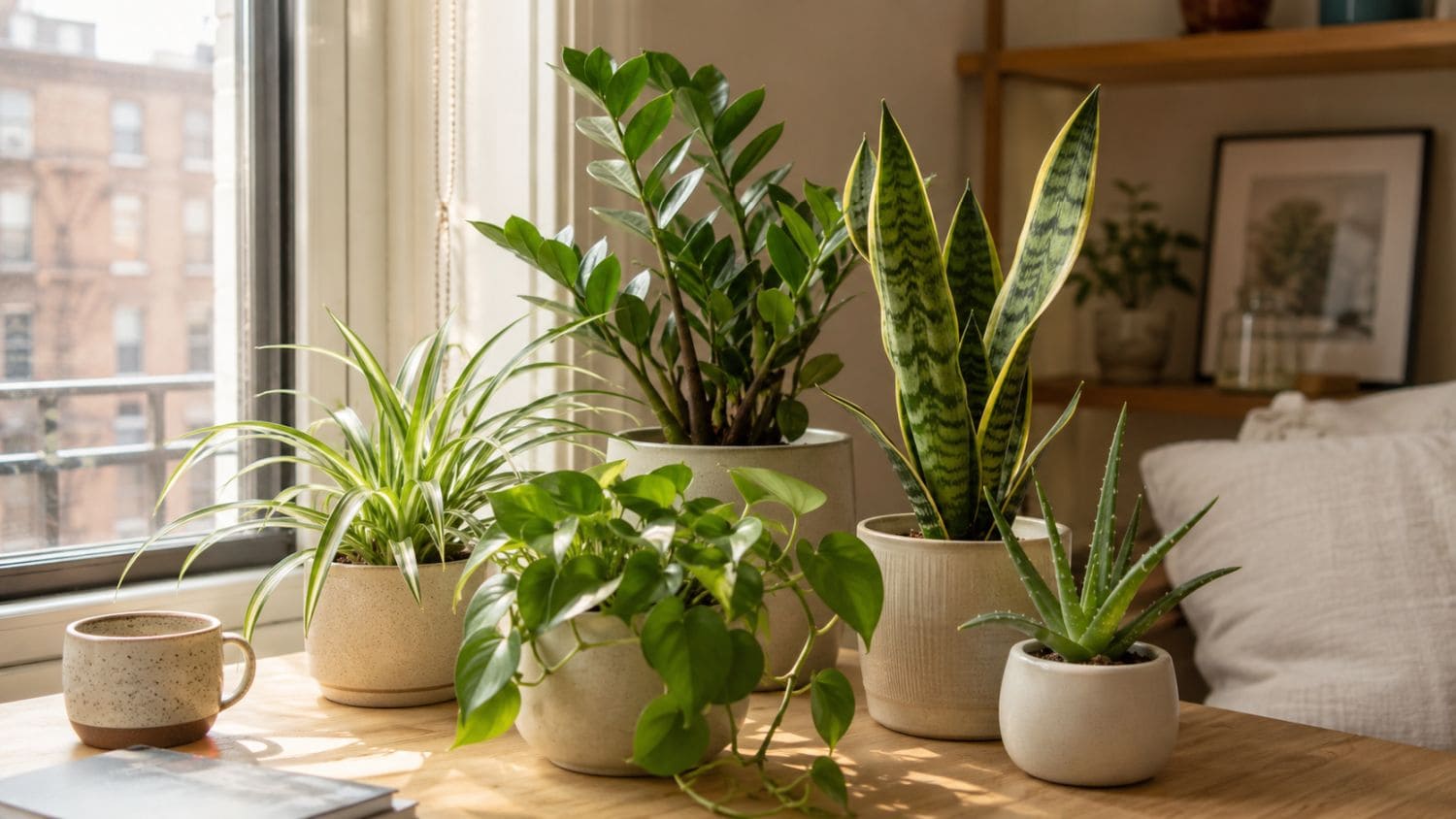
ZZ plant is practically “green furniture.” In deep shade, it can freeze in place for a year, turning into a monument to itself. Do not expect new shoots from it in a dark corner; it will simply stand there and silently judge you for the lack of light.
Pothos
Pothos is convenient where you want to add greenery without complicated care: on a shelf, cabinet, in a hanging planter, or near a workplace. It grows quickly, easily produces long trailing stems, and brings greenery to a calm interior. It develops best in indirect light, but can also adapt to partial shade. In very weak lighting, variegated varieties lose contrast and the stems stretch.
Spider plant
Spider plant is one of the most straightforward options for beginners. It grows quickly, looks good in hanging planters, and usually recovers after minor care mistakes. It suits ordinary room temperature, indirect light, and moderate watering. If leaf tips dry out, the cause is often dry air, irregular watering, or water quality. For home and office, this is a calm, affordable, and predictable plant.
Dracaena
Dracaena is suitable for those looking for a more noticeable interior plant: for a living room corner, study, office, or spacious hallway with access to light. It does not like harsh direct sun, but deep shade is not suitable either. The best option is bright indirect light. Watering should be moderate, without standing water in the pot. Dracaena has one weak point: with dry air and watering mistakes, the leaf tips may dry out.
Aglaonema
Aglaonema works well in rooms where there is less light than desired. It is valued for decorative leaves: they can be green, silvery, spotted, or softly pink-toned. The plant grows calmly, does not require constant attention, and fits well into interiors without direct sun. Watering should be careful: the soil must not turn into a swamp. For a beginner, green varieties are usually better, as they are generally easier than strongly colored ones.
Jade plant
Jade plant, or money tree, is suitable for those who forget to water plants. It has fleshy leaves that store moisture. It needs a bright location and infrequent but proper watering after the soil has dried out. In shade, jade plant stretches and loses its neat shape, while overwatering can quickly damage the root system. This is a good option for a windowsill, small shelving unit, or work corner with natural light.
Aloe
Aloe is a simple choice for a bright windowsill. It tolerates dry air, infrequent watering, and does not require complicated care. Like other succulents, it needs loose soil and a pot with a drainage hole. In the back of the room, aloe will weaken, so it is better to place it closer to a window. The main risk is frequent watering, especially in winter, when the plant uses less moisture.
Peace lily
Peace lily is popular as a gift plant, but it should not be called entirely problem-free. Peace lily is the main “drama queen” of the plant world. At the slightest thirst, it dramatically drops all its leaves, imitating an imminent end, but usually “comes back to life” a couple of hours after watering. For a beginner, it is an ideal training plant: it tells you when it is time to bring the watering can
Plants for low-light conditions
What counts as low light
Low light is not complete darkness. Indoor plants can tolerate a north-facing window, a place in the back of a bright room, an area near a window without direct sun, or an office with plenty of indirect light. But a windowless corridor, a bathroom without natural light, and a far corner where almost no daylight reaches are poor conditions even for hardy species.
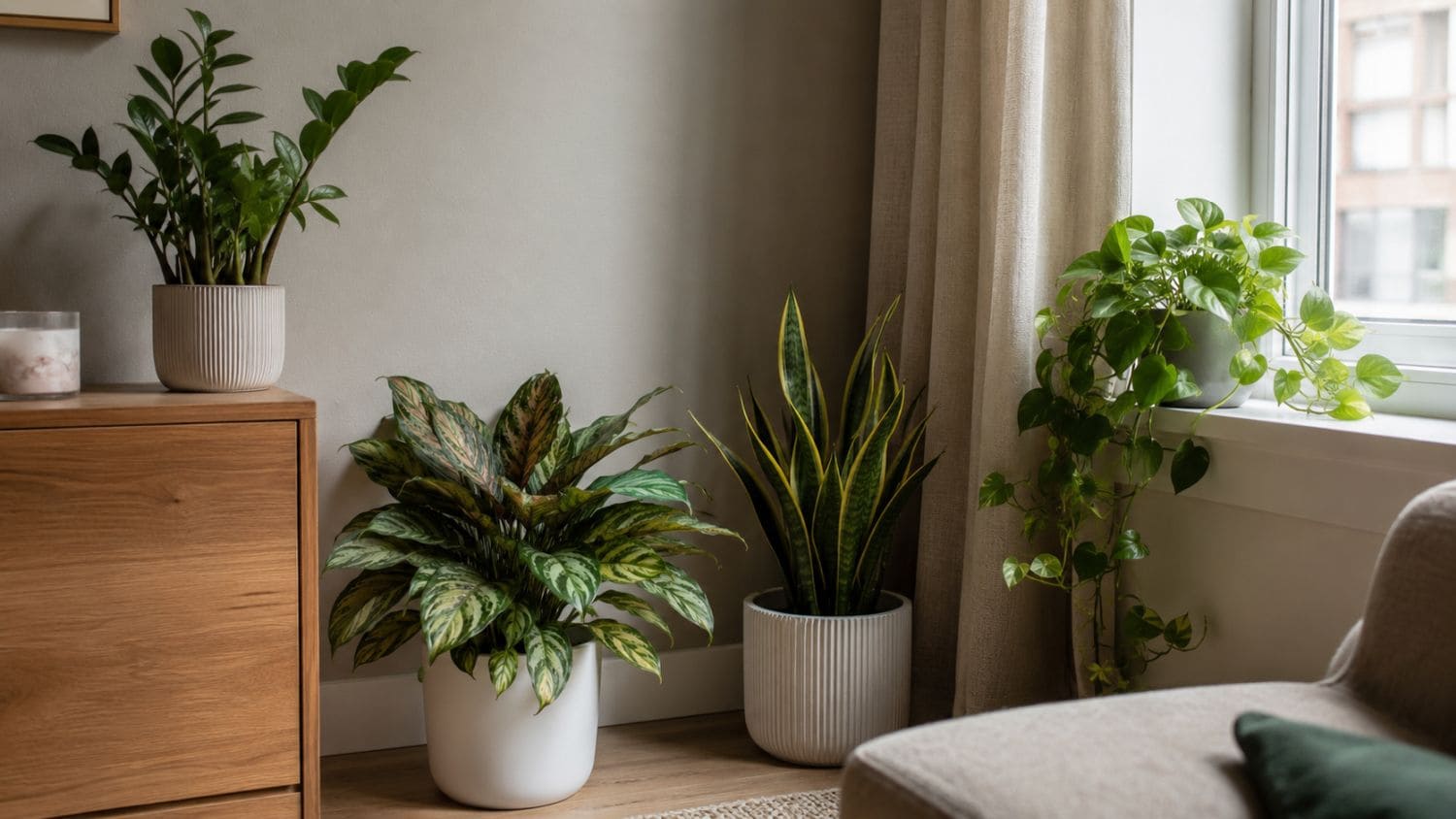
If a plant stands far from a window, it receives far less light than it seems to a person. Human eyes may feel comfortable in the room, while the plant already lacks light. That is why the phrase “plants for a dark room” is better understood as a convention. It refers to species that are more tolerant of partial shade, not to plants capable of growing normally without light.
It is important to remember the “two-meter rule”: at that distance from a window, light intensity drops almost tenfold. What seems like a “bright room” to you may be deep twilight for a plant. If you do not see a clear shadow from your hand where the pot stands, it is too dark for most species.
Which plants tolerate partial shade better
For low-light conditions, people most often choose aglaonema, snake plant, ZZ plant, cast iron plant, pothos, dracaena, and some philodendrons. These plants do not require bright sun and can maintain their decorative appearance where many flowering species would struggle.
Aglaonema is well suited to calm rooms and offices with indirect light. ZZ plant withstands irregular care, but grows slowly in partial shade. Snake plant keeps its shape and does not take up much space. Cast iron plant is valued for its endurance, although it grows slowly. Pothos is suitable for shelves and hanging planters, but with insufficient light it may lose density and leaf color. Dracaena looks better where there is still enough light for stable growth.
Which plants should not be placed in a dark spot
Succulents and cacti are poor choices for dark corners. They need light; otherwise they stretch, lose shape, and become weak. Jade plant, aloe, and most echeverias are better kept closer to a window, rather than used as greenery for the back of the room.
Flowering plants also require caution. Orchids, many begonias, anthuriums, and other decorative flowering species often need more light than ordinary green plants. In partial shade, they may survive, but flowering may never happen. Variegated varieties are not always suitable for low light either: the brighter the leaf pattern, the higher the chance that the coloring will become paler without enough light.
How to tell that a plant lacks light
Lack of light rarely looks like a sudden problem. More often, the plant changes gradually: new leaves become smaller, stems stretch, and the spaces between leaves increase. In variegated varieties, the pattern may fade or almost disappear. Growth slows down, and after watering the soil dries more slowly because the plant uses less moisture.
Another signal is that the plant leans toward the window. This is not dangerous by itself, but it shows that there is more light from one side. The pot can be turned occasionally, and if the plant clearly weakens, it is better to move it closer to a source of daylight. For an office or a windowless bathroom, it is more practical to provide a grow light immediately or choose artificial greenery than to try to make a live plant grow where it has no conditions for growth.
Plants that do not need frequent watering
Why infrequent watering is not always better
Plants that calmly tolerate pauses between waterings are often bought with simple care in mind. This is convenient for busy people, offices, studies, and apartments where the owners sometimes leave for several days. But infrequent watering by itself does not make a plant healthy. It still needs suitable soil, a drainage hole in the pot, and a place where the soil has time to dry out.
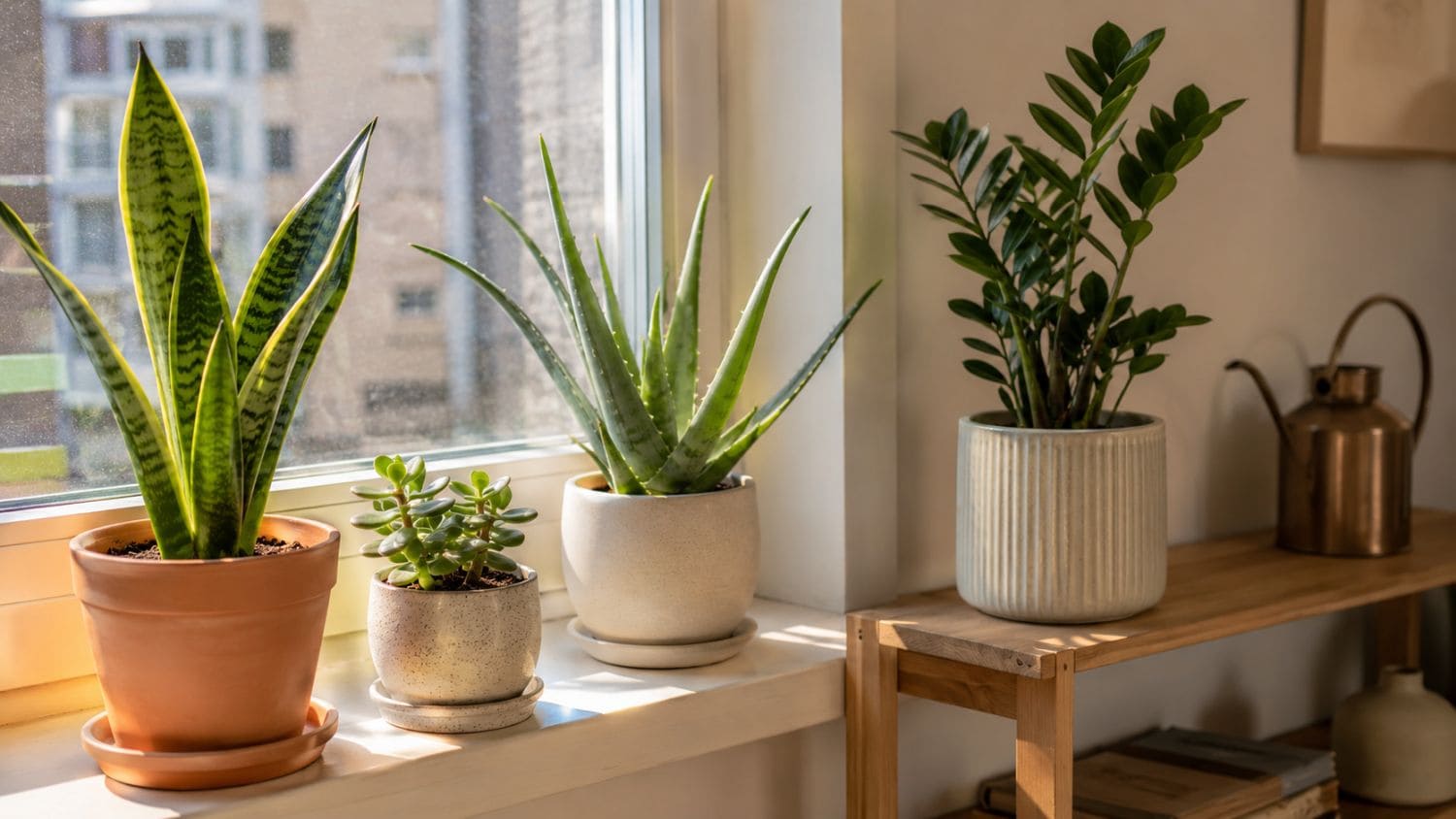
For many hardy plants, the main danger is not drought, but constant wetness. When a pot is watered “just in case,” the roots are left without proper air access, the soil turns sour, and the plant begins to weaken. From the outside, this can look misleading: the leaves wilt, and it seems as if the plant lacks water, although inside the pot there is already too much of it.
That is why plants for infrequent watering are best chosen by those who are ready not to touch the watering can without a reason. In this case, the simple habit of checking the soil before watering works better than any schedule.
Best plants for infrequent watering
ZZ plant is well suited for those who often forget about their plants. It stores moisture in its roots and thick petioles, so it tolerates a dry pause more easily than excess water. It is best watered after the soil has dried out noticeably.
Snake plant also does not like frequent watering. Its dense leaves help it survive dry periods, while overwatering quickly becomes a problem. This is a good option for an office, a hallway with some light, or an apartment where plants are not watered every week.
Jade plant and aloe prefer a bright location and infrequent watering. Their fleshy leaves store moisture, so they are suitable for windowsills, work areas, and small home collections. In shade, these plants stretch, and in wet soil they can lose their roots.
Hoya tolerates moderate dryness and looks good in a hanging planter or on a shelf. It needs light without harsh midday sun and careful watering after the soil has dried out.
Cacti and some succulents are also chosen for infrequent watering, but they require enough light. If they are placed in a dark corner, simple care will no longer help: the plant will weaken, stretch, and lose its shape.
How to water these plants correctly
The most reliable principle is to look not at the calendar, but at the condition of the soil. The same ZZ plant by a window in summer and in a cool room in winter will use water differently. In hot weather, soil dries faster; in winter, noticeably more slowly. Pot size, soil composition, temperature, and lighting also affect watering frequency.
Before watering, it is better to check the top layer of soil with a finger or a wooden stick. If the soil is still moist inside, the watering can should wait. After watering, excess water should not remain in the saucer. For plants that do not like wet soil, this is especially critical.
For beginners, it is easier to start with this rule: a short dry pause is better than constant moisture. The exceptions are plants that need a more even moisture regime, such as peace lily or calathea. They should not be included in the group of plants for infrequent watering.
Signs of overwatering
Remember: “dry” leaves with wet soil are an SOS signal. It means the roots have already rotted and simply cannot move water upward. In this case, watering will only finish the plant off. The only chance is urgent repotting with a root inspection.
Common signs of excess moisture are yellowing leaves, soft stems, dark spots, an unpleasant smell from the soil, mold on the surface, and a pot that dries very slowly. In succulents and aloe, leaves may become watery and soft. In ZZ plant, individual petioles turn yellow, and with serious overwatering, the roots suffer.
If these symptoms appear, the plant should not be “treated” with extra watering or fertilizer. First, the soil, drainage, pot, and care frequency need to be checked.
Low-maintenance plants for the office and desk
What conditions are usually found in offices
Office plants live under stricter conditions than home plants. On weekdays, they may be near air conditioners, heating, artificial light, and drafts from doors. On weekends, plants are often forgotten altogether. Sometimes the pot stands far from a window, and watering depends on who first notices that the soil is dry.
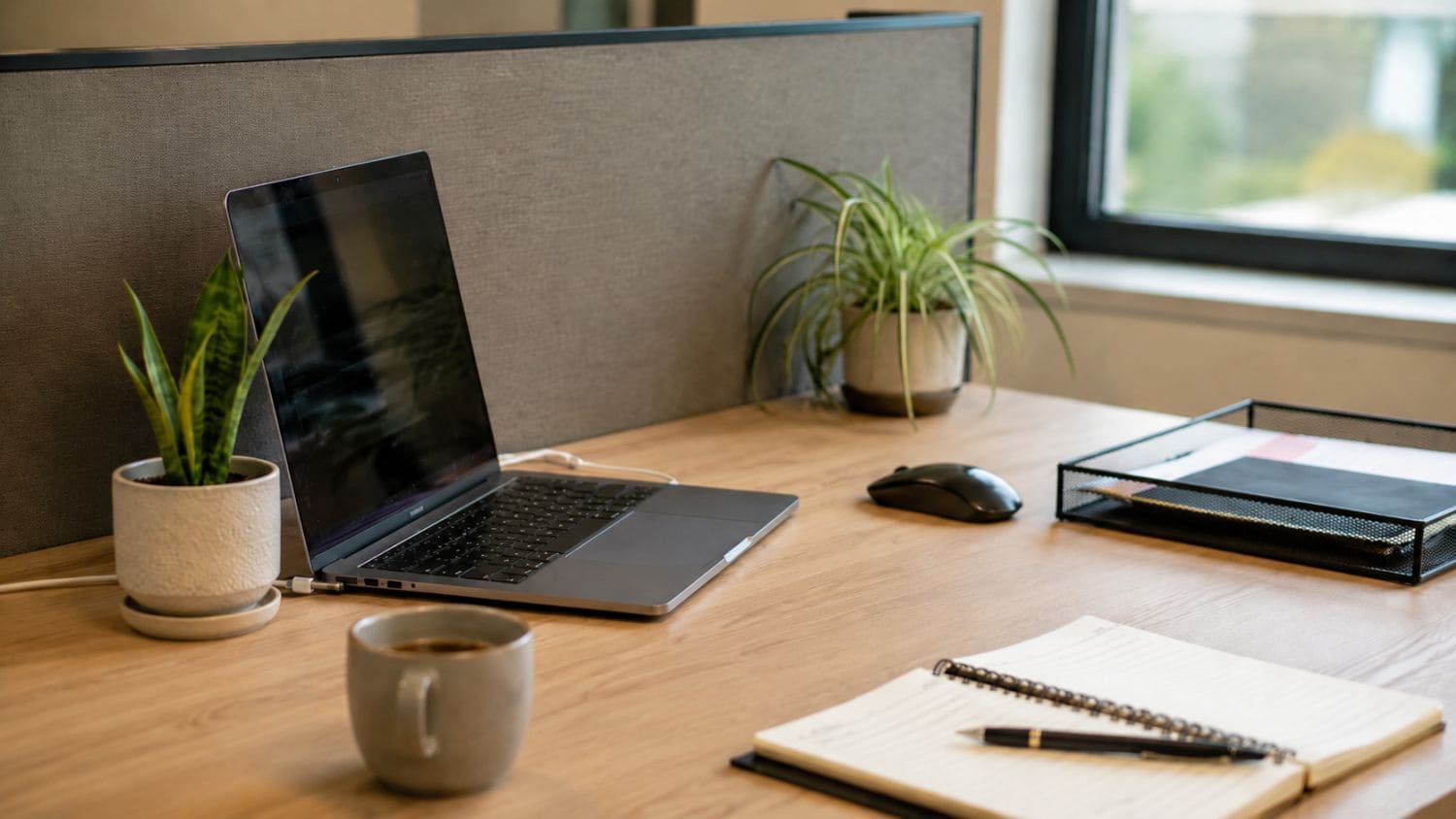
Another office problem is limited space. A plant should not interfere with documents, walkways, equipment, or cleaning. A large ficus may look attractive in a lobby, but be inconvenient next to a work desk. A small succulent on a desk will be appropriate only where it gets enough light.
For an office, it is better to choose species with predictable care. The plant should tolerate imperfect conditions, but not require daily attention, complicated misting, or constant humidity control.
Best plants for the office
ZZ plant, dracaena, large snake plant, cast iron plant, and some ficuses are well suited for floor greenery. They have a noticeable presence, help fill an empty corner, waiting area, or meeting room, and do not require complicated care. The main thing is not to place them in complete darkness or overwater them.
Pothos, spider plant, aglaonema, and compact forms of snake plant are convenient for work areas, shelves, and racks. Pothos looks good at height and quickly produces green trailing stems. Spider plant recovers more easily after minor mistakes. Aglaonema suits calm indirect light and adds decorative value through its leaves.
If there is little natural light in the office, it is better to choose ZZ plant, snake plant, cast iron plant, or green varieties of aglaonema. But even for them, real light levels should be assessed. If the plant stands in a windowless zone, a grow light or periodic relocation will be needed.
Plants for a work desk
On a work desk, a plant should be compact, stable, and not too demanding. Mini snake plant, small peperomia, spider plant in a small planter, compact pothos, and individual succulents with good lighting are good options. These plants do not take up much space and do not create a sense of clutter.
Succulents should be placed only on a bright desk or near a window. In the back of an office, they quickly lose their shape. Fittonia can look attractive, but it needs more stable humidity, so it is not the best option for truly irregular care. It can be used where plants are actually looked after.
For a desk, it is better to choose pots with saucers or planters from which water will not reach documents or equipment. The plant should be easy to move, clean around, and check for soil moisture.
Which plants are poor choices for the office
Plants with a strong fragrance are poorly suited to the office. What one person finds pleasant may disturb another person’s work. For this reason, fragrant flowering species are better left for the home, display window, or short-term decoration, rather than permanent workspace greenery.
Capricious flowering plants that require bright light, stable humidity, and regular care are also poor choices. If a plant quickly drops flowers, sheds leaves, or constantly reacts to drafts, it will soon lose its appearance in an office. Some ferns, calatheas, gardenias, azaleas, and miniature potted roses can prove difficult.
Plants with thorns, milky sap, or large spreading leaves should be used with caution in narrow walkways. In an office, a plant should be not only attractive, but also convenient for the people working nearby.
Why office plants need straightforward care
In an office, plants are rarely cared for by one person with a stable routine. Today they are watered by the administrator, tomorrow by an employee near the window, and a week later by no one. That is why care should be simple and clear: when to water, where to place the plant, what to do with dry leaves, and when to replace or repot it.
For companies, flower shops, and studios, this is a practical point. In a regular assortment, it is easier to keep plants for which care can be explained clearly to the buyer: how much light they need, how often to check the soil, and what the plant does not tolerate. Such items are easier to sell for offices, gifts, and interior greenery because the client receives not just an attractive pot, but a clear solution for their conditions.
Which indoor plants to choose as a gift
What to consider when choosing a plant as a gift
A potted plant is a good gift if it does not become a new obligation for the recipient. Before buying, it is worth thinking not only about appearance, but also about where the gift will stand. In a bright apartment, the choice is wider; for an office or a north-facing window, it is better to look for species that are more tolerant of partial shade.
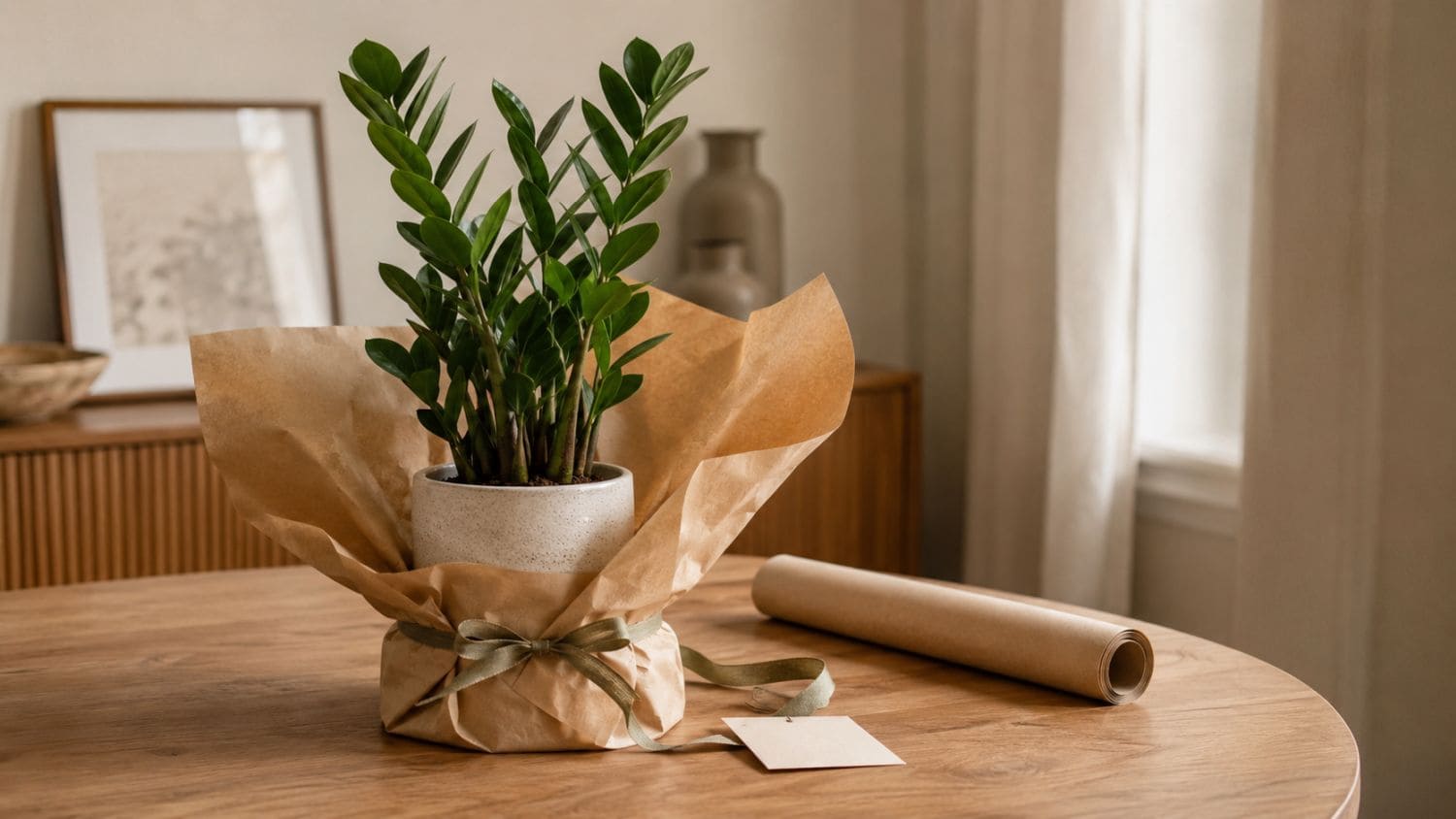
The person’s experience also matters. Someone who has never kept plants at home should not be given a capricious species with a precise watering regime, high humidity needs, and a requirement for bright light. It is better to choose a plant that responds clearly to care and does not die after one mistake.
Size is a separate issue. A large floor plant looks substantial, but in a small apartment it may turn out to be inconvenient. If you do not know the conditions, it is safer to choose a compact option in a neat planter. If there are cats or dogs, it is better to check the specific species in advance: a plant’s popularity does not mean it is safe for animals.
Best gift plants for a beginner
Plants with straightforward care are suitable for someone without experience. ZZ plant tolerates pauses between waterings well and looks restrained, which is why it is often chosen for the home and study. Snake plant takes up little space, keeps its shape, and does not require frequent attention. It is convenient to give to those who like laconic plants without a lush crown.
Spider plant is a softer, more domestic option. It grows quickly, looks good in a hanging planter, and usually recovers after minor mistakes. Pothos is suitable for a shelf, rack, or hanging placement: its stems quickly add greenery to an interior. Jade plant is good for a bright location and infrequent watering, but it should not be placed in shade.
These plants forgive irregular care, but they do not cancel the basic rules. It is useful to add a short care card to the gift: where to place it, how to check the soil, and what is better not to do.
Plants as interior gifts
If the gift is chosen not as a first plant, but as a noticeable interior element, larger species can be considered. Monstera looks good in a spacious room, near a sofa, chest of drawers, or work area. Dracaena suits studies, lobbies, and living rooms where a vertical plant is needed without an overly spreading shape.
Ficus is often perceived as a more “grown-up” interior option. It can look expensive and calm, but it requires a suitable location and does not like sudden changes. A large snake plant is a good choice for a minimalist interior: it does not spread outward, does not take up much space, and looks good in a simple planter.
For an interior gift, the planter is almost as important as the plant itself. A plastic nursery pot rarely looks complete, while a neutral planter immediately makes the gift feel more put together. But it is better not to choose an overly decorative container if the room style is unknown.
Which plants are better not to give without checking first
An orchid can be a beautiful gift, but it is not always a good choice for a beginner. After flowering, the person often does not understand what to do with it next, and mistakes with watering and light quickly spoil the plant. The same applies to many decorative flowering species that look impressive at the time of purchase but require more precise care.
Without checking first, it is better not to give plants with a strong fragrance. In the store, the scent may seem pleasant, but in a small room it can quickly become intrusive. Large plants also require caution: monstera, a large ficus, or a tall dracaena need space, light, and normal access for care.
If the recipient has animals, it is better not to give peace lily, dieffenbachia, monstera, philodendrons, some ficuses, and other questionable species without checking them. Here the mistake is especially unpleasant: the gift may turn out to be not just inconvenient, but potentially dangerous for the pet.
Plants for different areas of the home: living room, bedroom, kitchen, and bathroom
Plants for the living room
The living room usually offers more space for large plants. Here you can use monstera, ficus, dracaena, ZZ plant, a large snake plant, or several plants of different heights. A floor pot helps fill an empty corner, soften strict furniture, and add a living accent without rearranging the entire interior.
The main thing is not to choose a plant only by size. A large monstera in a far dark corner will quickly lose its neat appearance, while a ficus near a radiator may drop its leaves. For a living room, it is better to assess in advance where daylight comes from, whether there are drafts, and whether the plant will obstruct passage. If space is limited, snake plant or ZZ plant is often more practical than broad, spreading species.
Plants for the bedroom
For the bedroom, it is better to choose calm plants without a strong fragrance, thorns, or heavy shedding. Good options include snake plant, spider plant, pothos, compact ZZ plant, and sometimes peace lily — if the room has enough indirect light and the owner is willing to monitor watering.
It is not worth promising that a plant in the bedroom will noticeably improve sleep or solve air-quality problems. A more honest criterion is visual comfort and simple care. The plant should not stand where it is constantly touched, next to a hot radiator, or in a cold draft from a window. If the bedroom is dark, it is better to choose one hardy species and place it closer to a light source, rather than collect a group of plants that will gradually weaken.
Plants for the kitchen
The kitchen is a place with changeable conditions. It can be hot, humid, or cool because of ventilation. Plants usually do poorly near the stove: hot air, steam, grease, and frequent fluctuations quickly damage the leaves. The main enemy in the kitchen is not only heat, but also a sticky greasy film that clogs the leaf pores. If your plant stands in the kitchen, give it a warm shower once every two weeks. Clean leaves = healthy breathing. It is better to place pots closer to the window, on a shelf, or on a windowsill if there is no severe overheating there.
Spider plant, aloe, pothos, small snake plant, and, with good lighting, potted herbs are suitable for the kitchen. Spider plant and pothos help add greenery without complicated care; aloe and snake plant are more tolerant of dry pauses. If there is little light, herbs are better avoided: they quickly stretch and lose their appearance.
Plants for the bathroom
The bathroom may seem like a good place because of humidity, but the main question here is light. If there is a window or regular access to daylight, ferns, peace lily, aglaonema, and pothos can be considered. More humid air may suit them, but they still need normal air exchange and careful watering.
In a bathroom without a window, live plants will suffer. Sometimes people try to keep them there “for beauty,” but without light they cannot grow normally. In that case, a grow light, periodic relocation of the plant to a bright place, or artificial greenery will be necessary. It is better to say this directly than to promise that a fern or peace lily will live calmly in a room without light.
Plants for the entryway and hallway
The entryway and hallway are often more difficult than the living room or bedroom. There is less light, more temperature fluctuation, and sometimes drafts from the front door. If at least part of the day brings indirect light there, ZZ plant, snake plant, or cast iron plant can be chosen. They do not require daily attention and look calm in narrow spaces.
But in complete darkness, even these plants will only slowly lose their shape. For a windowless hallway, it is better not to buy a live plant at random. If greenery is needed specifically in this area, it is worth considering lighting or periodic plant replacement. For a small entryway, it is better to choose vertical forms that do not catch on clothing and do not block passage.
Which plants are better to choose if you have cats or dogs
Why plant safety should be checked in advance
A home with animals changes the logic of choosing plants. A cat may taste a leaf, while a dog may knock over a pot or chew a stem. That is why you cannot rely only on the plant’s appearance or popularity in stores. Some familiar indoor species require caution when kept near pets.
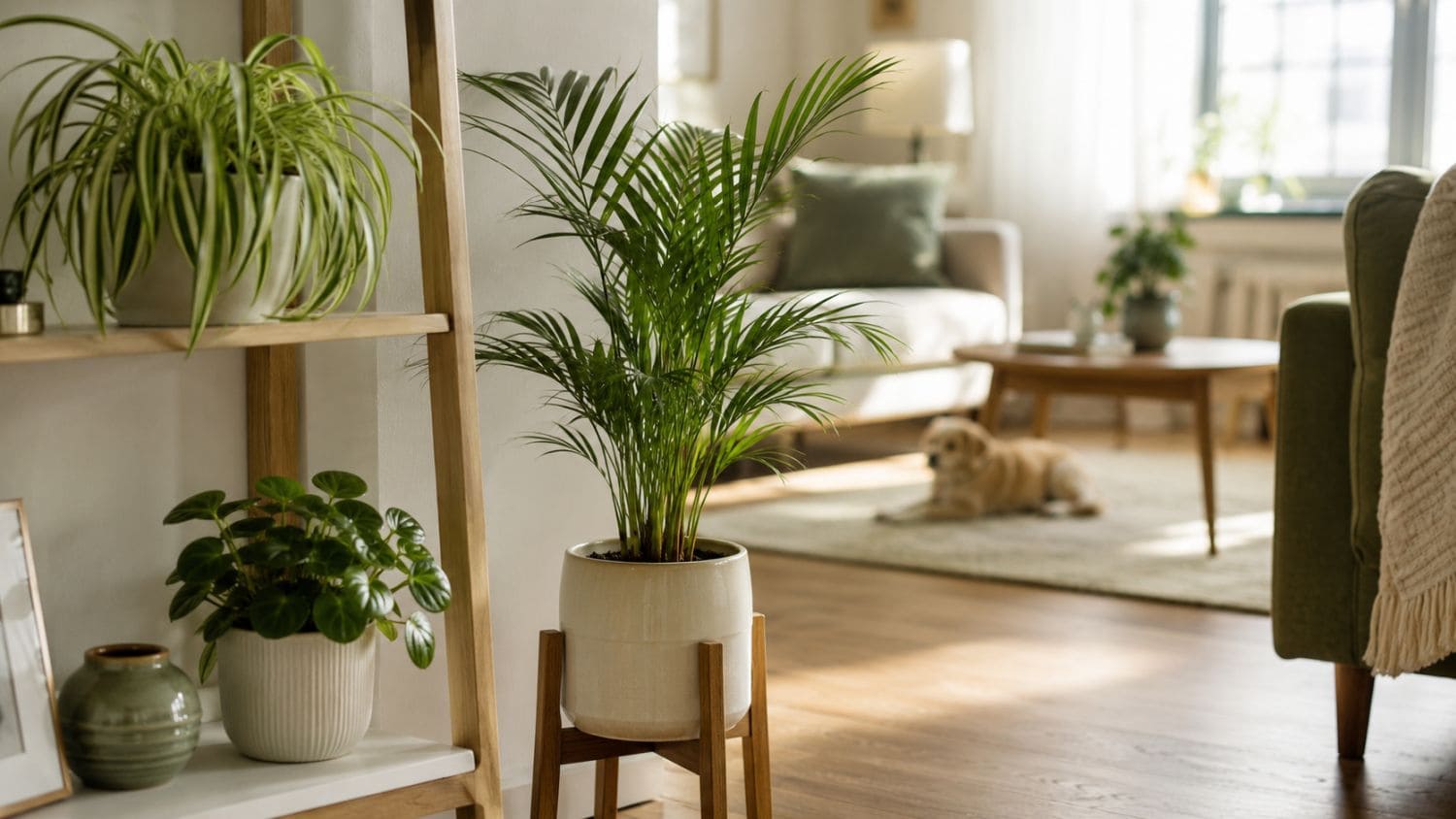
Names are another problem. A price tag may show a general commercial name, while the plant may have different species and varieties. Safety is better checked by the exact name, especially if an animal is actively interested in greenery. If there is any doubt, it is better to choose a safer option or place the plant where the pet cannot reach it.
Which plants are often chosen for homes with animals
For homes with cats and dogs, spider plant, peperomia, some palms, calatheas, and certain ferns are often considered. These plants often appear in selections for pet owners, but even here, a universal conclusion should not be made without checking the specific species.
Spider plant is convenient because it is easy to care for and recovers quickly. Peperomia is compact and easy to place on a shelf or desk. Some palms look good in interiors, but they need space and a stable pot. Calathea is decorative, but it needs more stable humidity, so it is more difficult for irregular care than ZZ plant or snake plant.
Which plants require caution
Peace lily, dieffenbachia, philodendrons, monstera, some ficuses, azaleas, and lilies require caution. These plants are popular and often look harmless, but for a home with animals, it is better not to buy them without checking first. This is especially true for cats, which can reach even a high shelf or windowsill.
There is no need to dramatize the issue and ban all indoor plants. But if the pet chews leaves, digs in the soil, or knocks pots over, the choice should be stricter. In such a situation, an attractive plant with a potential risk is a poor gift and a bad purchase for the home.
How to reduce the risk
The simplest method is to place plants out of animals’ reach. High shelves, hanging planters, closed shelving units, and stable floor planters can work. But with cats, this is not always effective: they easily reach places where a person did not plan to let them go.
Fallen leaves should be removed immediately, and new plants should be observed separately for the first few days. If the animal shows too much interest, the plant should be moved or replaced. When buying, it is necessary to clarify the exact species name and check its safety in reliable references in advance. This takes a few minutes, but prevents a situation where an attractive pot has to be urgently removed from the home.
Table: which plants to choose for different conditions
Quick choice by conditions
When there is no time to study each species separately, it is more convenient to start from the conditions. One plant tolerates infrequent watering better, another is more comfortable in partial shade, and a third looks good on a work desk. The table helps narrow the choice quickly, but it does not replace checking the specific location: light, temperature, pot size, and care routine.
| Condition | Suitable plants | What to consider |
| Low light | ZZ plant, aglaonema, snake plant, cast iron plant, pothos | At least minimal indirect light is needed |
| Infrequent watering | Snake plant, ZZ plant, jade plant, aloe, hoya | The main risk is overwatering |
| Office | Dracaena, ZZ plant, spider plant, pothos, aglaonema | Consider air conditioning, weekends, and irregular care |
| Gift for a beginner | Snake plant, ZZ plant, spider plant, pothos | It is better to choose a plant with straightforward care |
| Work desk | Mini snake plant, peperomia, spider plant, compact succulents | Avoid large and fast-growing species |
| Bright windowsill | Aloe, jade plant, hoya, succulents | Protect from overheating and avoid overwatering |
| Living room | Monstera, ficus, dracaena, ZZ plant, large snake plant | Check whether there is enough space and light |
| Bedroom | Snake plant, spider plant, pothos, compact ZZ plant | It is better to choose plants without a strong fragrance |
| Bathroom with a window | Fern, peace lily, aglaonema, pothos | Light and normal air exchange are needed |
| Home with pets | Spider plant, peperomia, some palms, certain ferns | Check the safety of the specific species |
How to use the table
The table is a quick reference point, not a ready-made solution for every apartment or office. The same ZZ plant can grow calmly in a bright room and almost stop growing in a far dark corner. Snake plant can withstand pauses between waterings, but will suffer in heavy wet soil. Spider plant is easy to care for, but with dry air and irregular watering, its leaf tips may dry out.
Before buying, it is better to answer a few questions: how much light the location receives, how often the plant can be watered, whether there is a radiator or air conditioner nearby, whether the pot will obstruct passage, and whether there are cats, dogs, or small children at home. This approach reduces the risk of a random purchase and helps choose a plant that will genuinely fit the conditions.
Common mistakes when choosing low-maintenance plants
Buying a plant only for its appearance
The most common mistake is choosing with the eyes alone. In the store, the plant looks fresh, large, and impressive, but at home it quickly becomes clear that there is no suitable place for it. A beautiful calathea may require more stable humidity, a large ficus may need good lighting and space, and a flowering plant may require careful care after purchase.
Appearance matters, but first you need to understand the task. A work desk needs a compact species; a dark corner needs a plant that tolerates partial shade; a gift for a beginner needs an option with simple care. If you start with the conditions, the choice is almost always more successful.
Placing a plant where there is no light
Shade-tolerant plants are often misunderstood. They can tolerate less light than many other species, but they are not designed to live in complete darkness. A windowless corridor, a bathroom without daylight, or a far office corner behind partitions is not partial shade, but almost a complete lack of growing conditions.
If a plant stands in a place that is too dark, it does not always die immediately. More often, it slowly loses its shape: it stretches, becomes smaller, stops producing new leaves, and fades. That is why even ZZ plant, cast iron plant, or snake plant needs at least indirect light.
Watering by schedule instead of soil condition
Watering “every Saturday” is convenient for a person, but it does not always suit the plant. In summer, soil may dry faster; in winter, more slowly. Soil dries differently in a small pot than in a large one. Near a window, a plant uses water more actively; in the back of the room, more slowly.
It is more reliable to check the soil before watering. If it is still moist inside, it is better to put the watering can aside. Many easy-care plants die not from the owner’s forgetfulness, but from excessive care: they are watered too often, kept in heavy soil, and their roots are not allowed to breathe.
Choosing a plant that is too large for a small space
A large plant looks attractive in a photo, but in a real room it can get in the way. Monstera spreads out, ficus needs space around its crown, and a tall dracaena may reach a shelf or end up too close to a radiator. If there is little space, the plant begins to be moved around, pushed into a corner, or cut back without a plan.
For a small apartment, narrow office, or workplace, it is better to choose vertical and compact forms: snake plant, ZZ plant, peperomia, small dracaena, or spider plant in a planter. They add greenery without taking over the room.
Not considering pets and children
If there are cats, dogs, or small children at home, a plant should be not only attractive and easy to care for. It is necessary to check whether the specific species is safe, how stable the pot is, whether the leaves shed, and whether there are thorns, irritating sap, or tempting trailing stems.
Some popular indoor plants require caution: peace lily, dieffenbachia, monstera, philodendrons, and certain ficuses. They can be found in almost any store, but for a home with an active pet or small child, the choice should be stricter.
Repotting immediately after purchase without need
After purchase, a plant needs time to adapt. It changes lighting, temperature, humidity, and watering routine. If at this moment you immediately repot it, wash the roots, change the soil, and place it in a new spot, the stress will only increase.
Urgent repotting is not always necessary. If the plant looks healthy, the soil does not smell damp, the roots are not spilling out of the pot, and no pests are visible, you can give it a few weeks to adjust. After that, you can decide whether it needs a larger pot or whether careful maintenance is enough.
How to choose low-maintenance plants for a store, studio, or office
Which plants are easier to keep in a regular assortment
For a flower shop or studio, plants that are clear to the buyer and suit different scenarios are convenient: home, office, gift, work desk, and interior greenery. These include ZZ plant, snake plant, dracaena, spider plant, pothos, jade plant, and peace lily with a note on watering.
These plants have a commercial advantage: they are easy to explain. The buyer can quickly be told where to place them, how often to check the soil, and what to avoid. This reduces the risk of disappointment after purchase. If a person comes back not with a complaint, but for a second plant, the assortment has been chosen correctly.
For office orders, it is better to keep more resilient and calm species: ZZ plant, snake plant, cast iron plant, dracaena, and aglaonema. They tolerate irregular care more easily and look neat without daily maintenance.
Why it is important to offer plants for a specific task
Selling an indoor plant works better when the buyer is helped to choose not the “most beautiful” option, but the suitable one. One person is looking for a gift for someone with no experience, another wants greenery for a dark study, a third is choosing a plant for a reception desk, and a fourth is worried that a cat will chew the leaves.
In such situations, short questions are useful: where will the plant stand, how much light is there, who will water it, are there animals, and is a compact or floor-standing option needed. This way, the store sells not a random pot, but a solution for the conditions. For a floral studio, this is especially valuable: trust appears where the buyer is not promised the impossible.
FAQ
Which indoor plants are the most low-maintenance?
The easiest plants to care for usually include snake plant, ZZ plant, spider plant, pothos, dracaena, jade plant, and aloe. These plants tolerate common household mistakes more easily: irregular watering, dry air, and imperfect conditions in an apartment or office. But even they need light, a suitable pot, and a proper watering routine.
Which plants are suitable for a dark room?
For low-light conditions, people most often choose aglaonema, ZZ plant, snake plant, cast iron plant, pothos, and some philodendrons. But a dark room should not mean a complete lack of light. In a windowless room, live plants will not grow normally without supplemental lighting or regular relocation closer to daylight.
Which indoor plants need watering rarely?
Snake plant, ZZ plant, jade plant, aloe, cacti, hoya, and many succulents tolerate infrequent watering best. They store moisture in their leaves, stems, or roots. The main mistake with such plants is overwatering. Before watering, the soil should be checked: if it is still moist inside, it is better not to add water.
Which plant should you give to someone with no experience?
ZZ plant, snake plant, spider plant, or pothos are suitable for someone with no experience. They are straightforward to care for, do not require daily attention, and tolerate small mistakes more easily. It is useful to add a short instruction to the gift: where to place the plant, how to check the soil, and what not to do in the first weeks after purchase.
Which plants are best for the office?
ZZ plant, snake plant, dracaena, aglaonema, pothos, spider plant, and cast iron plant are suitable for the office. These plants are more tolerant of irregular care, dry air, and indirect light. But they still should not be placed in complete darkness or next to a strong air-conditioning airflow.
Can plants be kept in the bedroom?
Yes, if the plants do not have a strong fragrance, do not shed heavily, and do not interfere with room care. Suitable bedroom plants include snake plant, spider plant, pothos, compact ZZ plant, and sometimes peace lily. It is better to choose calm foliage plants and place them where they receive enough indirect light.
Which plants are safe for cats?
There is no universal answer: safety should be checked by the specific species. In selections for homes with pets, spider plant, peperomia, some palms, and certain ferns are often mentioned. But before buying, it is better to confirm the plant’s exact name and check it against a reliable reference, especially if the cat likes to chew leaves.
Why did a low-maintenance plant die?
Most often, the cause is overwatering, lack of light, unsuitable soil, a cold draft, a pot without drainage, or repotting immediately after purchase. Sometimes a plant looks easy to care for, but it has been placed somewhere unsuitable. Resilience helps it survive a mistake, but it does not compensate for consistently wrong conditions.
-
10 Leading Flower Farms in Colombia
Colombia’s flower industry is far more diverse than its reputation for roses alone suggests. The ...
-
Top 10 Ecuadorian Rose Farms
Ecuadorian rose farms differ significantly in scale, cultivar range, post-harvest systems, and ex...
-
Low-maintenance indoor plants for home, office, and gifts
Choosing an indoor plant is easier when the space, light, watering routine, and people caring for...


Categories
Carnation Red
 Colombia


 Kenya
Kenya

Country Blues
 Ecuador