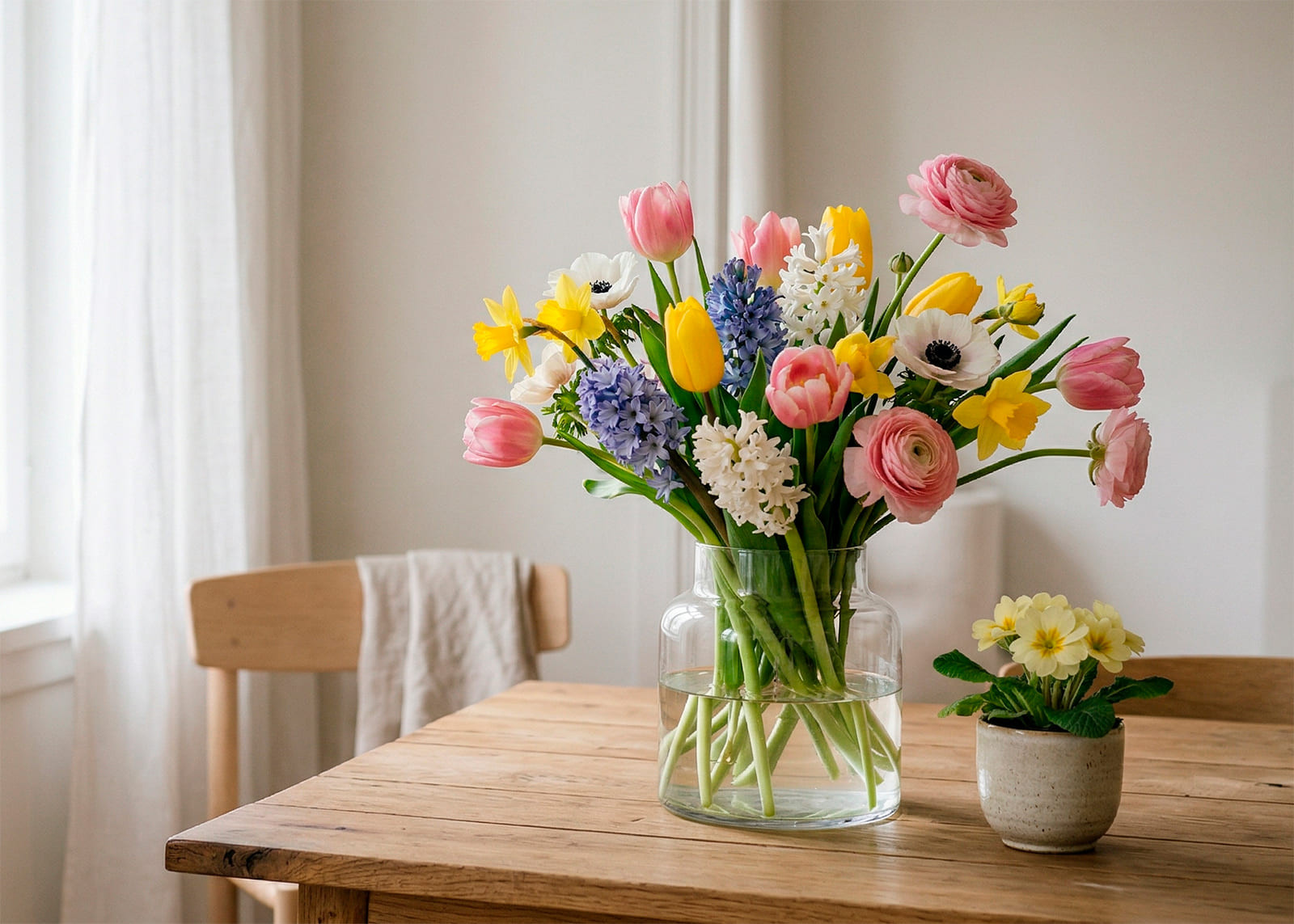
Top 10 Spring Flowers and Plants for Home and Gifting
Why flowers are chosen more often in spring
Why demand for bouquets and houseplants increases in spring
In spring, flowers are purchased noticeably more often, and the reason is not just the season itself. After winter, people tend to add something alive, light, and visually fresh to their space. Even a single bouquet on the table or a small flowering plant on the windowsill changes the feeling of a home more than it may seem.
There is also a practical side. In spring, it is easier to find flowers and plants that look appropriate without excessive formality. They work well both as a gift and for home use: they do not feel heavy, do not require complex presentation, and align naturally with the seasonal mood. That is why during this period people more often choose not something “formal,” but something that feels natural and comfortable in everyday life.
How spring holidays influence the choice
In spring, demand is further driven by occasions when flowers are purchased more actively. International Women’s Day, Easter, and Mother’s Day make this season a period of frequent flower purchases, but the holidays themselves act more as a background than the main factor.
What matters more is that during this period people look for options that are clear, appropriate, and not random. Not just “which bouquet to buy,” but what to choose so that the gift feels fresh, seasonal, and without a sense of cliché. For this reason, spring flowers and plants are always in focus.
Why this list is needed
In spring, the selection is wide, and that is exactly the challenge. Everything looks attractive in the display, but not every flower is equally suitable for home use, and not every plant is convenient as a gift. Some options lose their appearance quickly, others require more care than expected at purchase, and some simply do not fit a specific occasion.
This selection is intended to simplify the choice. It includes spring flowers and plants that are actually worth considering if you need a gift or want to add a seasonal feel to your home without unnecessary mistakes. The list can be quickly reviewed to understand what suits your needs: a bouquet, a flowering plant, or something more versatile.
Contents
Tulips
What makes tulips a strong choice
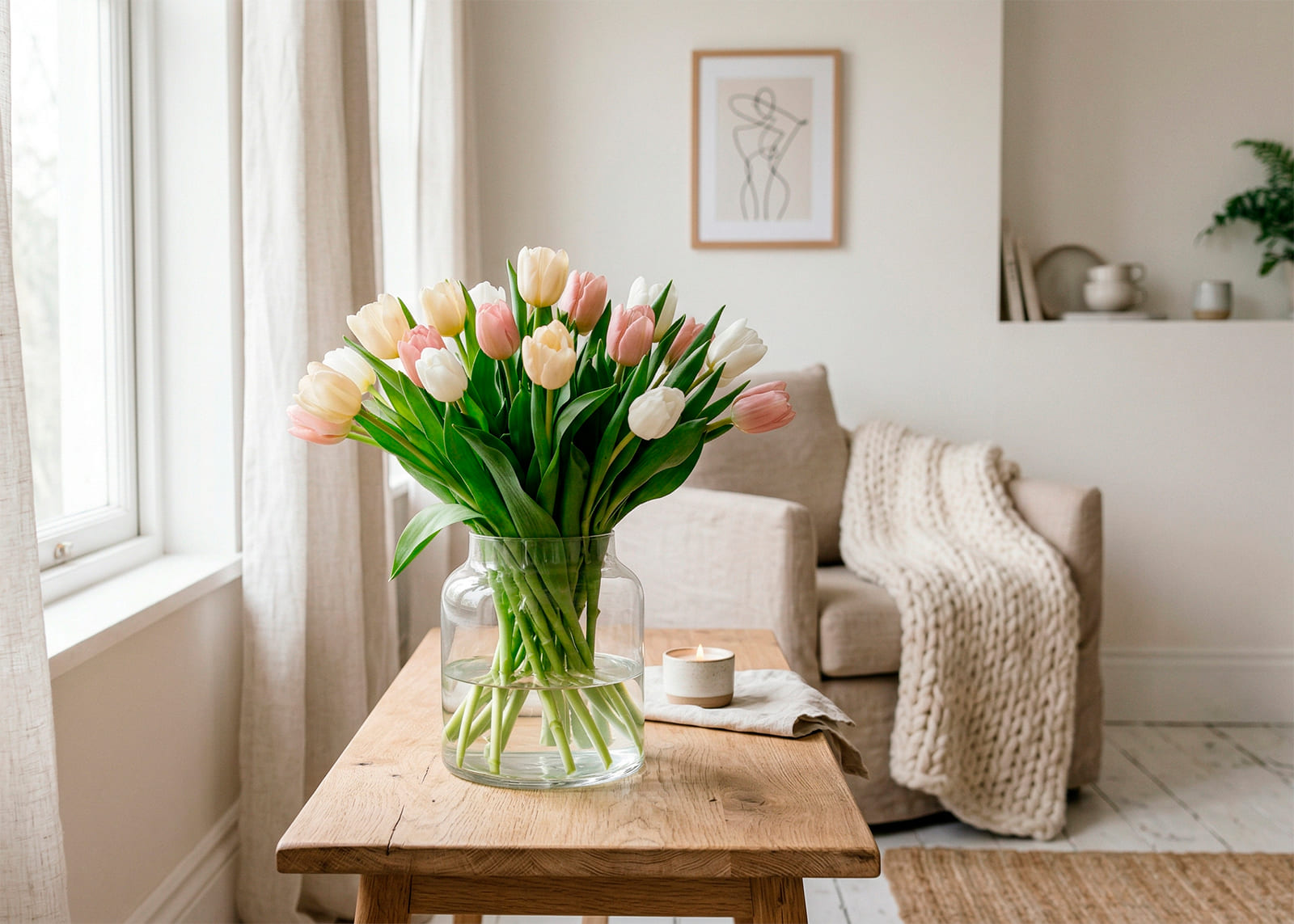
Tulips are difficult to confuse with other spring flowers. They have a clean, recognizable shape, a neat bud, and a look that does not require complex wrapping or additional decoration. They can appear delicate, structured, bright, or calm — depending on the variety and color.
That is why tulips are so closely associated with spring. They do not feel heavy or overly decorative. This is a flower that immediately creates a sense of freshness, light, and a new season. Even a small bouquet already works as a spring accent.
Why this is one of the most relevant spring flowers
Tulips have a strong advantage: they are perceived as a natural choice for spring rather than a universal option for any occasion. Because of this, they never feel random. On the contrary, they fit the season precisely and without effort.
Another advantage is the wide range. White, cream, yellow, pink, red, lilac, almost black, single-color and bi-color, more structured or softer in form. This allows tulips to be selected for a restrained gift, for a home vase, or for a simple but visually balanced bouquet.
Who they suit and for what occasions
Tulips work well precisely because of their versatility, but not in a generic way. They can be given to a close person, a colleague, a mother, or a friend — and in most cases it will feel appropriate. They do not require interpretation and do not create a sense of an overly formal gesture.
For home use, tulips are also a strong option. They look good in a simple glass vase, do not conflict with the interior, and do not require a complex arrangement. If the goal is something simple, seasonal, and natural, this is one of the safest choices.
Key care considerations
Tulips prefer cooler conditions. The warmer the room, the faster they open and lose their neat shape. It is better to keep them away from radiators, direct sunlight, and overly warm areas.
Water should be changed regularly, and stems slightly trimmed before placing them in a vase. Too much water is not necessary: a low level is usually enough. This is one of those cases where basic care noticeably affects the appearance within the first days.
Hyacinths
What sets hyacinths apart
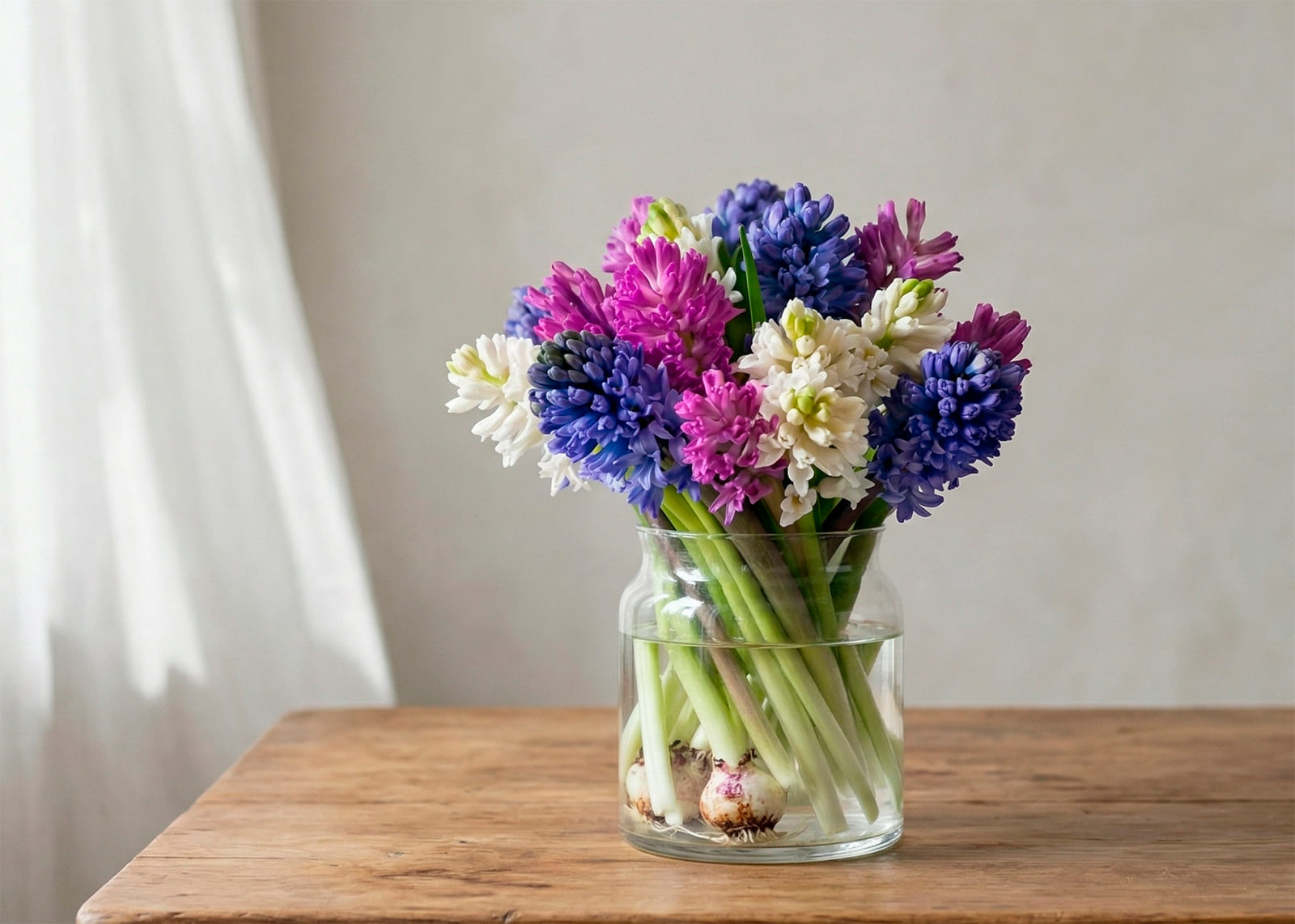
Hyacinths are easy to recognize by their dense inflorescence and intense fragrance. This is not a flower about lightness, but about structure and a defined character. It looks compact yet noticeable, especially when the bloom is fresh and full.
Hyacinths have a distinct quality: they almost instantly create a sense of real spring. Not decorative or abstract, but tangible — with scent, color, and the feeling that the season has truly changed.
Why hyacinths are especially good in spring
Hyacinths perform best in their natural season. In summer or autumn they do not create the same impression, while in spring they align perfectly with the seasonal mood. That is their strength: they are not just visually appealing, but truly seasonal.
Beyond appearance, they also have an emotional effect. A hyacinth in a room is perceived more strongly than many other spring plants. It adds not only color but also atmosphere. That is why it is often chosen not for versatility, but for the mood it creates.
Where they are best used: gift or home
Hyacinths are especially effective in pots. In this format, they look neat, take up little space, and are perceived as a considered spring gift rather than something quickly chosen. This is a practical option when the goal is to give a living plant rather than a bouquet.
For home use, hyacinths are also very suitable, especially for windowsills, dining tables, or small decorative areas. They are used in arrangements as well, but most often they perform best in a compact presentation where their form and fragrance can be fully appreciated.
Basic care
Hyacinths need light but without overheating. They perform better in cooler conditions than in a warm room. The higher the temperature, the faster the plant passes its peak bloom.
Watering should be moderate. The soil should not dry out completely, but overwatering should be avoided. This is one of those cases where excess water is more problematic than being slightly cautious. If the plant is placed in a decorative pot, it is especially important to prevent water from accumulating at the roots.
Daffodils
What kind of flower it is and why it is practical
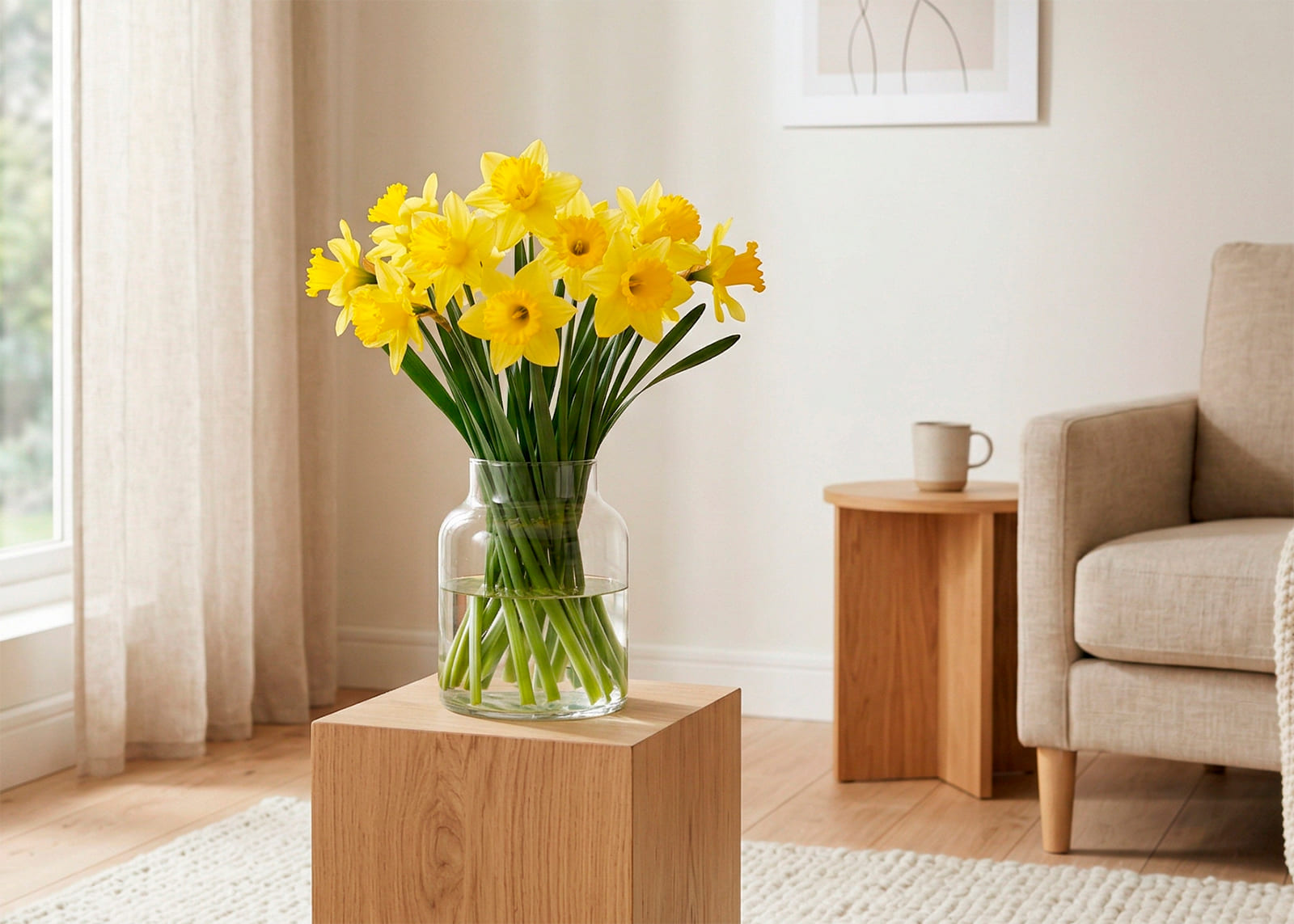
Daffodils are one of the most straightforward spring flowers. They are light in feel, bright without unnecessary heaviness, and immediately read as a seasonal choice. They do not have a complicated image: they look fresh, clean, and distinctly spring-like.
Their practicality lies in the fact that they work well even without a complex arrangement. A few stems already look complete. Daffodils do not need to be “built” into a large bouquet to make an impression. That is what makes them practical both for gifting and for home use.
Why daffodils are especially in demand in spring
Daffodils have a very strong seasonal association. This is a flower that is rarely perceived outside a spring context, and that is exactly why it works so well at this time of year. It looks fresh not because it is fashionable, but because it aligns naturally with the season.
There is another point as well: daffodils do not overload a space. They add color and a sense of renewal, but do not look overly formal. In spring, that matters especially, when the goal is something light but not visually empty.
When it makes sense to choose daffodils
Daffodils work well for home use when the goal is to place something seasonal in a vase without excessive fullness. They look lively and neat, especially in simple interiors where freshness matters more than effect.
They are also suitable as a gift, but rather in a lighter, less formal setting. This is a good option when a large gesture is not needed, but there is still a desire to give something pleasant, spring-specific, and free from clichéd formality.
How to extend their freshness
Daffodils need fresh water and a cool place. The less overheating, the longer they retain a neat appearance. It is best to change the water regularly, especially if the bouquet is kept in a warm room.
There is also an important detail: daffodils do not always combine well with other flowers immediately after cutting. That is why mixed bouquets with daffodils require a more careful approach. If maximum freshness and less hassle matter, it is simplest to place them separately.
Ranunculus
Why ranunculus attracts attention
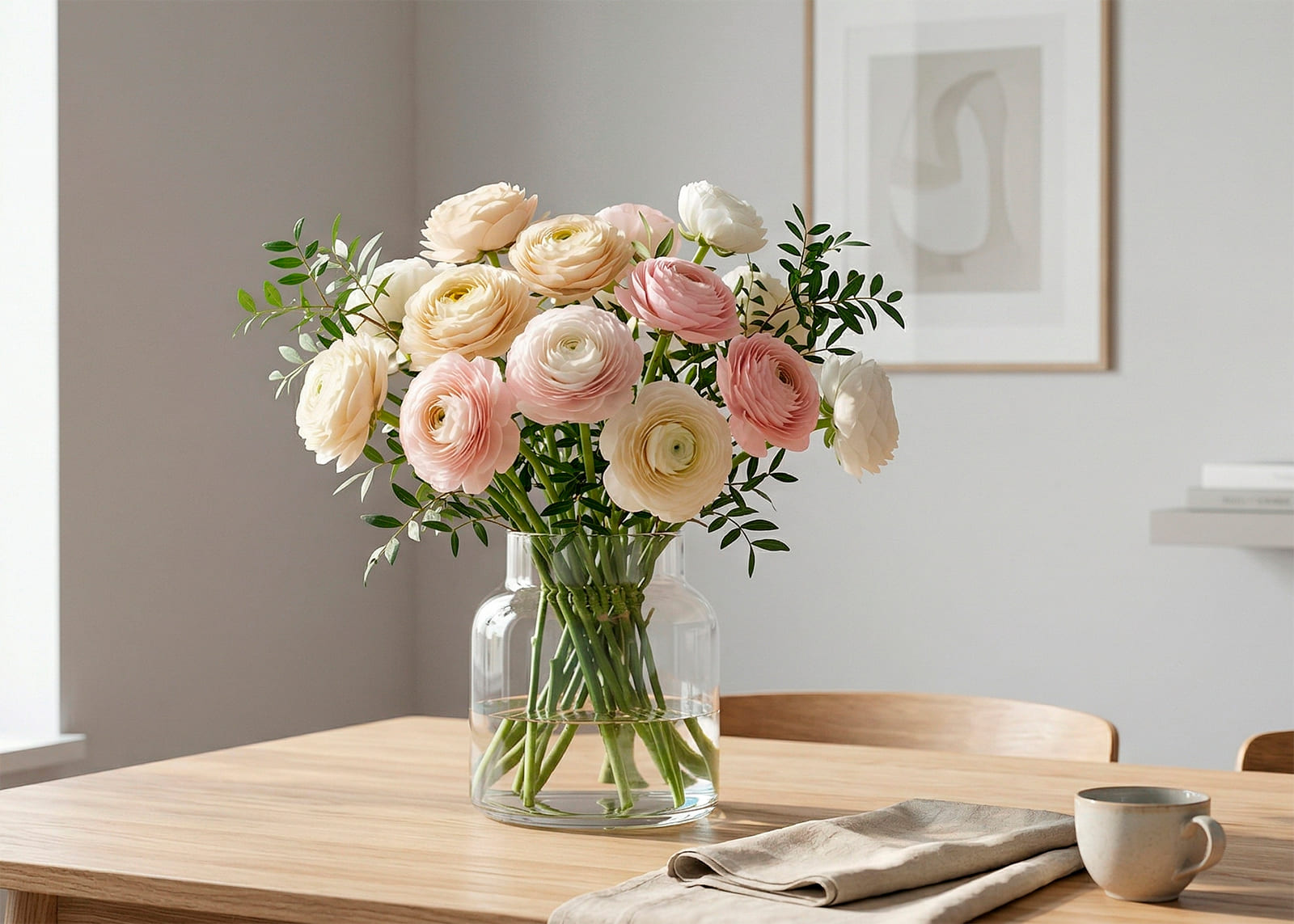
Ranunculus is valued for its intricate, almost jewelry-like form. It has many thin petals gathered into a dense, neat bud, which makes the flower look full and refined even without a large bouquet. Visually, it is immediately perceived as something more composed and delicate than familiar mass-market options.
The color palette also plays a role. Ranunculus often comes in very soft, calm shades: cream, powdery tones, peach, muted pink, white, pale yellow. Because of this, it looks expressive without being loud. That balance is exactly what makes it stand out.
Why it is especially relevant in spring
In spring, people often look not just for bright flowers, but for something delicate, seasonal, and at the same time not too obvious. Ranunculus fits that need very precisely. It looks fresh and light, while also giving a bouquet a more refined and considered appearance.
It is a strong option for situations where standard spring flowers feel too simple, while anything heavy and lush no longer suits the season. Ranunculus offers exactly the kind of presentation that feels especially appropriate in spring: soft, attractive, and without unnecessary pressure.
What occasions it suits best
Ranunculus works well in gift bouquets when the goal is something neat, stylish, and slightly more composed in mood. It is suitable not only for a romantic setting. It is also often chosen when a beautiful but less obvious option is needed.
For home use, it also performs well, especially in a simple vase without an overloaded arrangement. Just a few stems already look complete. If the interior is calm and the goal is to add a soft color accent, ranunculus does that with precision.
What to keep in mind in care
Ranunculus looks delicate — and that is worth considering in care as well. It needs clean water, a cool place, and careful handling of the stems. The less heat and dry air around it, the better it keeps its shape.
It is best to trim the stems slightly before placing the flowers in a vase and to change the water regularly. At the same time, it should be handled without haste: ranunculus petals are delicate, and any rough treatment becomes visible quickly.
Anemones
How anemones differ from other spring flowers
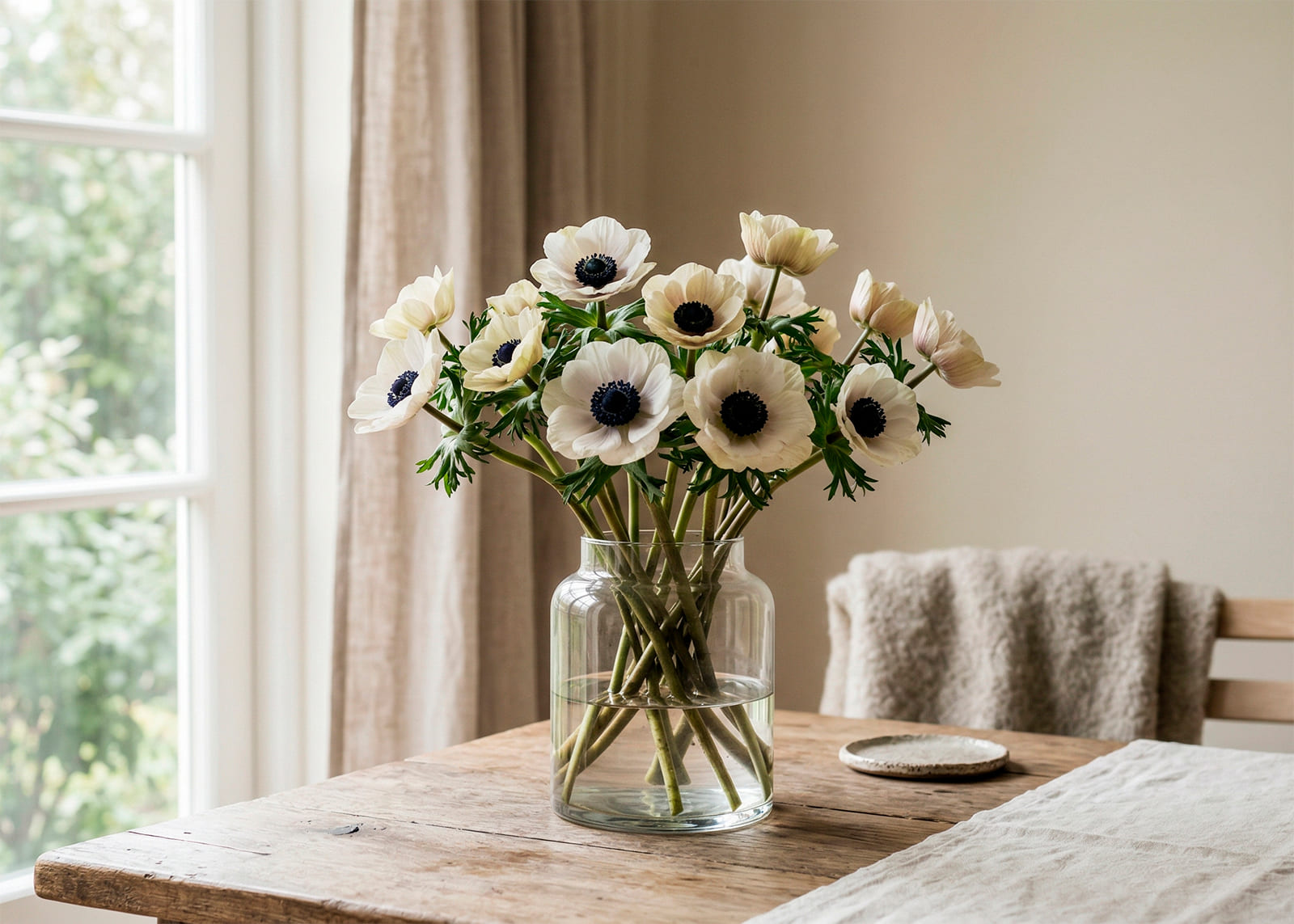
Anemones have a very recognizable look. They are usually chosen not for volume, but for their graphic quality: bright petals and a contrasting dark center make the flower immediately noticeable. It looks expressive even in small quantities and does not get lost among more familiar spring options.
Anemones have another quality as well: they look modern. Without deliberate exoticism, without unnecessary decoration, but with character. That is why they are often chosen by those who do not want an overly soft or predictable presentation.
Why they are chosen in spring
In spring, anemones are especially appealing because they look seasonal without being too obvious. This is not the kind of flower people buy out of habit. It is more for those who want to keep the feeling of spring while moving away from standard choices.
In addition, anemones convey a distinctly fresh spring mood. They do not feel heavy, do not require complex styling, and at the same time give a bouquet visual presence. That is what they are valued for: fresh, noticeable, and free from a clichéd feel.
For gifting or for home
Anemones work well both as a gift and for home use, but they are especially appreciated by those who prefer more character-driven flowers. If the goal is not just a “pleasant bouquet,” but something with a visual accent, this is a strong option. They look good both in mono-bouquets and in more structured arrangements.
For home use, anemones are also interesting, especially if the goal is to place something in a vase that is not too full but still noticeable. They work well in modern interiors where form and clarity of presentation matter more than quantity.
Brief care notes
Anemones benefit from cool water and a location without overheating. It is better not to place them in direct sunlight or near heat sources, otherwise they lose freshness and shape more quickly.
Water should be changed regularly, and stems should be lightly retrimmed from time to time. They are not the most demanding flowers, but care accuracy matters here: the more stable the conditions, the better anemones look in a vase.
Freesias
What freesias are valued for
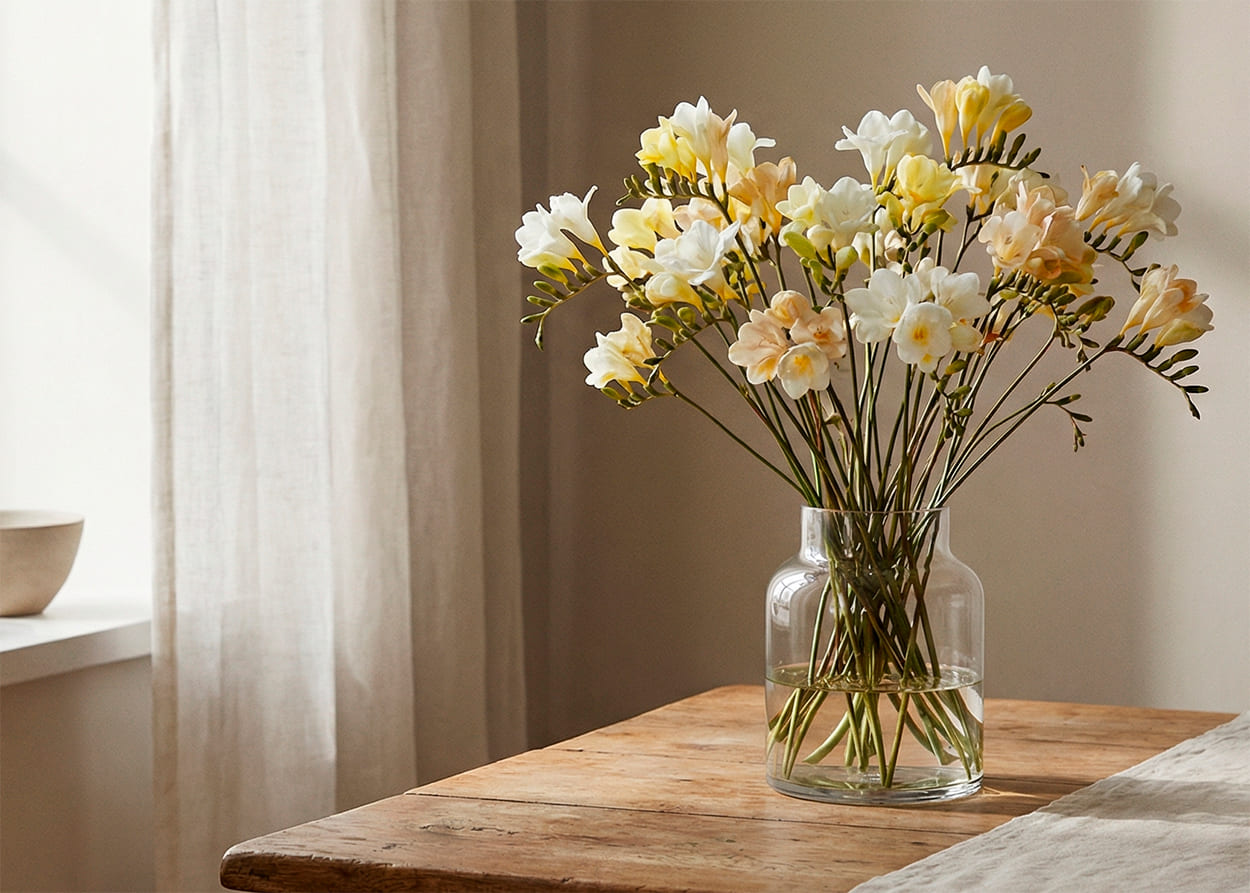
Freesias are valued for the lightness they bring without feeling empty. They have thin, elegant stems, neat flowers, and a noticeable but not heavy fragrance. This is a case where the flower does not try to dominate, but instead makes the arrangement feel more alive and fresh.
Freesias have another strong quality as well: they look very natural. Without overt luxury, without coarse volume, without excessive formality. That is why they are often chosen by people who value not effect, but a neat and pleasant presentation.
Why this is a good spring choice
In spring, flowers that do not overload a bouquet or make it feel too dense in mood are especially valued. Freesias are exactly that kind of flower. They add air, freshness, and movement, which almost always works in favor of a spring arrangement.
Freesias also fit the season well not only visually, but in overall feel. They do not look heavy, quickly create a light spring image, and work well when the goal is something delicate but not dull.
When freesias are especially appropriate
Freesias are a good option for gifting when a soft and neat choice is needed without excessive formality. They are suitable for small bouquets, for a thoughtful gesture, and for a spring gift that does not feel random but also does not seem too official.
For home use, freesias are also very practical. They look good on a dining table, on a side table, or on a work surface — wherever there is a need to add freshness without overloading the space with a large arrangement. This is one of those flowers that fits easily into everyday surroundings.
How to care for freesias
Freesias need fresh water and cool conditions. In a warm room, they open faster, but they also lose their decorative quality sooner, so it is better to keep them away from radiators and direct sunlight.
It is advisable to change the water regularly, and fading flowers should be removed as needed so that the stem looks neater. Care is simple here, but the result is noticeable: under normal conditions, freesias keep both their shape and fragrance longer.
Peonies
Why peonies remain one of the most sought-after spring flowers
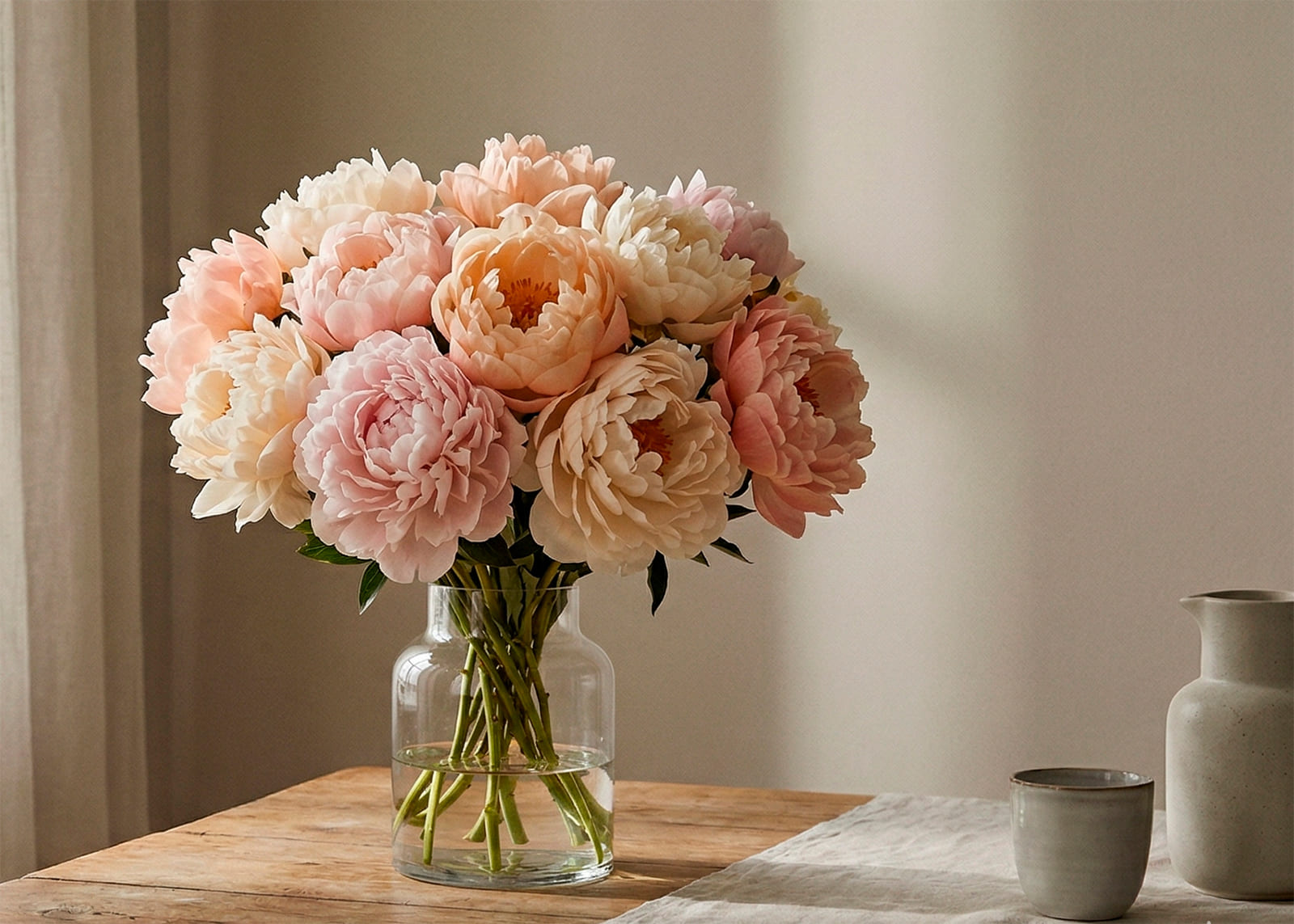
Peonies are valued for the effect they create almost immediately. Even a few stems already look like a complete bouquet. They have large buds, a soft petal texture, and that characteristic fullness that reads as festive, but not heavy.
At the same time, peonies do not look harsh or cold. They have volume without roughness, presence without excessive severity. That is why they are often chosen when the goal is to give something genuinely beautiful, not just seasonal.
When peonies are especially in demand in spring
Demand for peonies becomes especially noticeable closer to late spring, when there is a preference for more expressive flowers than the earlier, lighter seasonal options. At that point, they become one of the most desirable choices for gift bouquets and more visually prominent arrangements.
They are often chosen for occasions where a modest gesture is not enough, and a bouquet with real presence is needed. Peonies work well for spring occasions where not only freshness and seasonality matter, but also visual impact.
Who they suit best
Peonies are a good choice for gifting when the goal is to make the gesture slightly more expressive. They suit occasions where it is important not just to be appropriate, but to create the sense that the bouquet was chosen with care. At the same time, peonies do not require elaborate styling: they already create the desired effect on their own.
For home use, they also work well when a noticeable accent is needed in the interior. Peonies look especially good in a spacious vase, on a table, on a console, or in a bright room. This is not the most neutral flower, but that is exactly its strength: it changes the mood of a space immediately.
Key care considerations
Peonies need fresh water and careful trimming of the stems before being placed in a vase. If the buds are still tight, proper hydration and a cool setting are especially important — this gives them a better chance to open well rather than fade too early.
Peonies do not tolerate heat well. If placed near a radiator or in direct sunlight, they may open too quickly and lose their shape sooner. They perform best in a bright but not hot place.
Primroses
What makes primroses a good spring plant
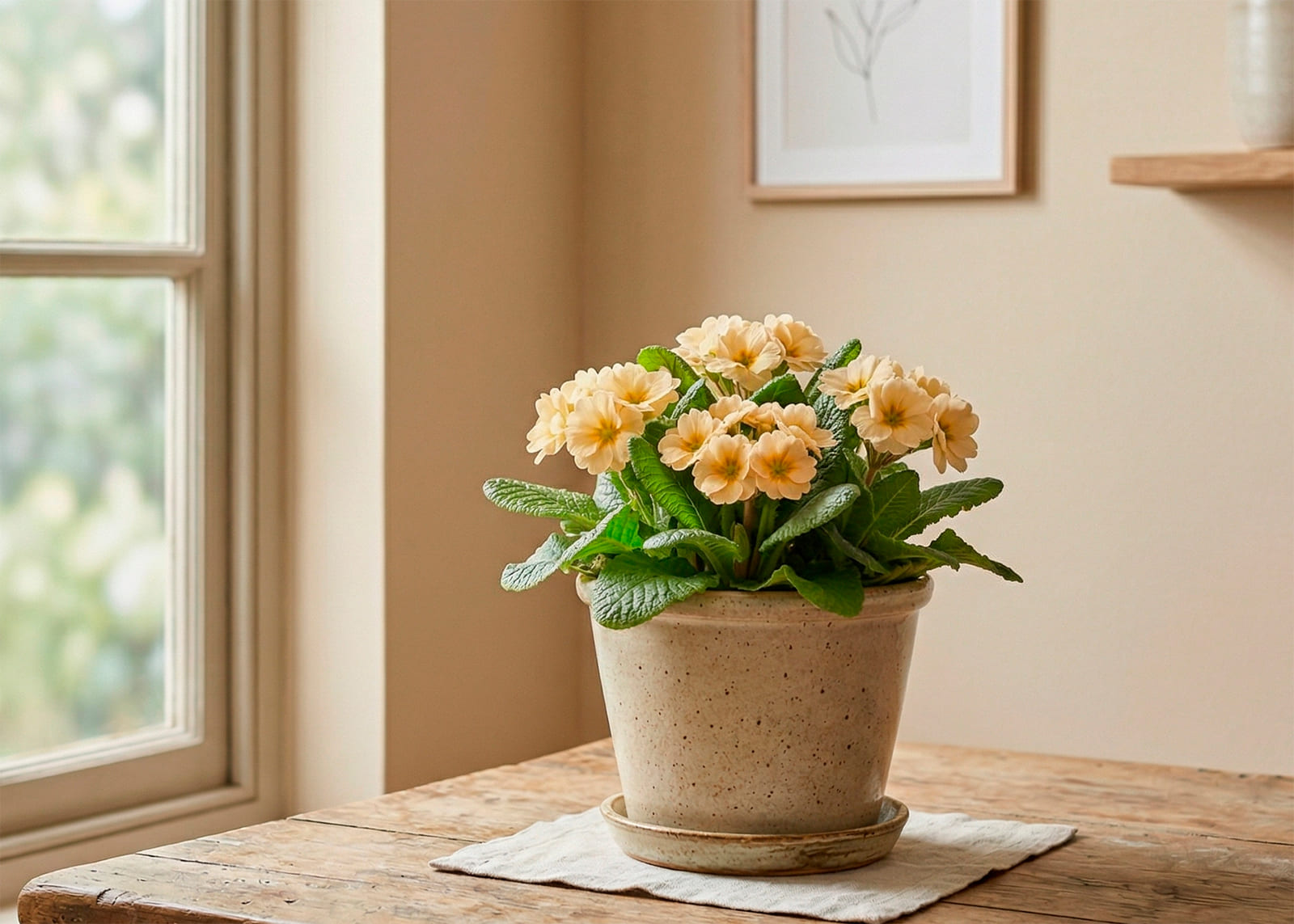
Primroses are practical because they do not require much space while still adding color to an interior. They are compact, bright, and do not look like a random purchase made simply to fill a windowsill. This is exactly the kind of plant that feels natural and appropriate in spring.
Primroses also have another advantage: they are easy to live with. There is no need to spend time trying to fit them into a space or invent a special way to present them. Put them on a windowsill, in the kitchen, or on a small table — and the seasonal effect is there without extra effort.
Why they are especially suitable in spring
In spring, primroses work especially well because they do not compete with the season, but actively support it. They do not look overly formal, do not require complex arrangement, and work well in places where the goal is simply to add life and color.
Primroses look especially good in spaces that do not need a strong accent. A windowsill, a kitchen, a small table, or a bright corner of a room — these are the places where they perform best. In spring, that is often enough to make a space feel noticeably more alive.
What situations they suit
Primroses are first and foremost a good choice for home use. They are a practical option when the goal is specifically a living flowering plant rather than a bouquet that lasts only a few days. They work well in everyday interiors where compact size and simplicity matter.
As a small gift, primroses are also appropriate. Especially when the goal is not a formal bouquet, but something calmer and more domestic in feel. This is a good option for a light spring gesture that does not look overly official.
How to care for primroses
Primroses do best in diffused light and with moderate watering. The soil should remain slightly moist, but not wet. Overwatering should be avoided: in a small pot, the effects become noticeable quickly.
Very warm spots do not suit primroses. If the air is dry and hot, the plant loses its fresh appearance more quickly. It is better to keep it in a place that is bright but protected from overheating and direct harsh sunlight.
Muscari
What makes muscari interesting
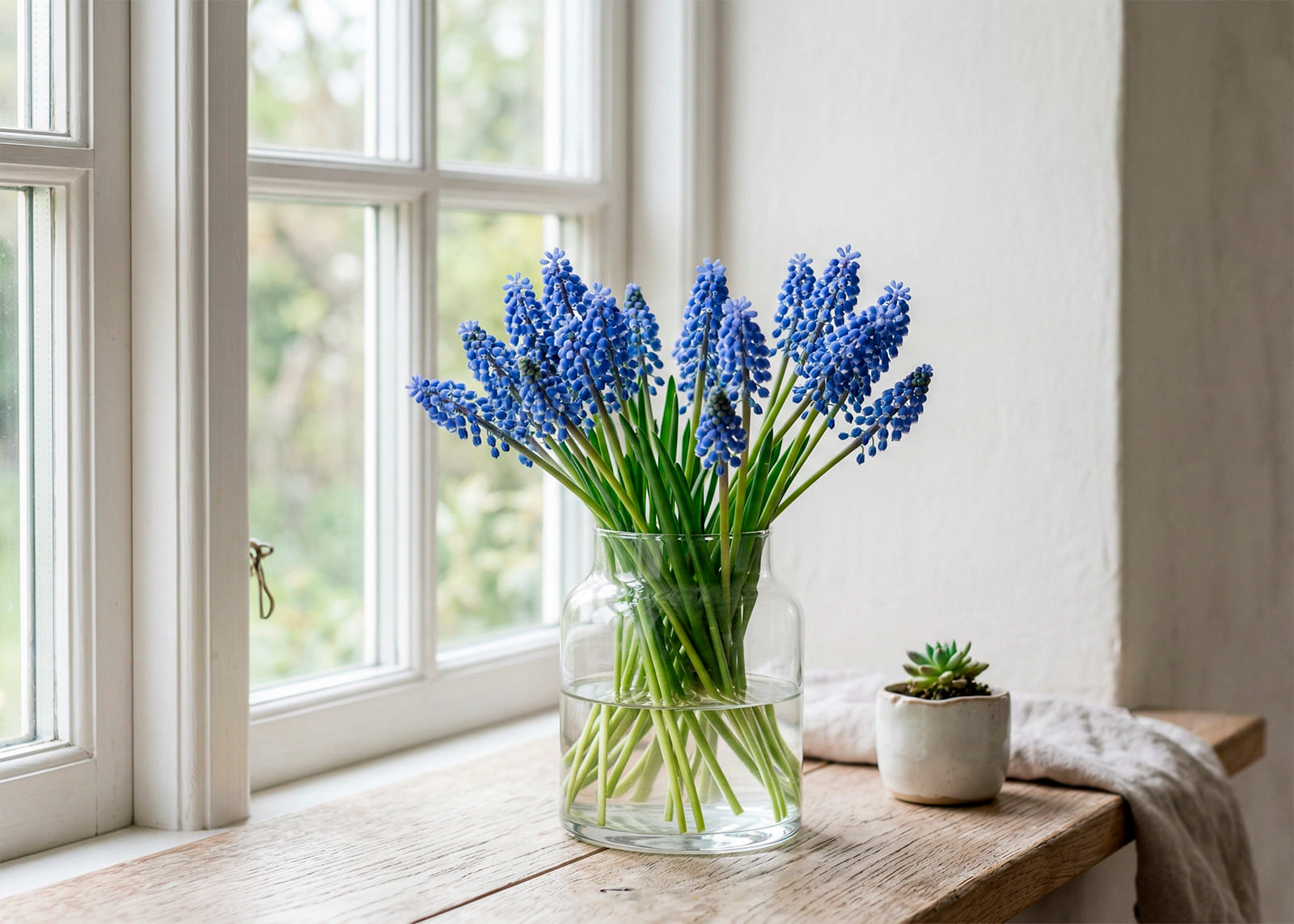
Muscari does not try to make an impression through size. Its strength lies elsewhere: in neatness, form, and a very precise spring mood. The small flower clusters are easy to recognize, and that is exactly why they look not invisible, but delicate and composed.
This plant works well for those who prefer a more restrained presentation. Muscari does not overload an interior and does not look too decorative. At the same time, it has character, and in season that character is very clear.
Why it is worth considering specifically in spring
In spring, muscari is especially effective because it gives a sense of the season without unnecessary brightness or visual noise. This is not a universal plant for year-round use, but a specific spring accent — and that is exactly why it works with more precision.
If the goal is to add something living to the home, but not something large or overly eye-catching, muscari is a very sensible option. It conveys a spring mood calmly, without trying to dominate the space.
Where it looks best
Muscari looks best at home: on windowsills, small tables, and in compact decorative areas. It works well where neatness matters and a large volume is not needed. In this format, the plant feels especially natural.
Muscari also works well in small arrangements and as a potted gift. This is not a choice for a dramatic gesture, but for a more subtle and understated presentation. That is exactly why it is often appreciated by those who do not like overly obvious floral options.
Care basics
Muscari needs light and moderate moisture. The soil should not dry out completely, but constant dampness does not suit it either. A steady routine without extremes works best here.
Like many spring plants, muscari performs better in cool conditions than in heat. If kept in a place that is too warm, its decorative period becomes shorter. That is why a bright and moderately cool place is usually the best option for it.
Azalea
Why azalea is included in this spring selection
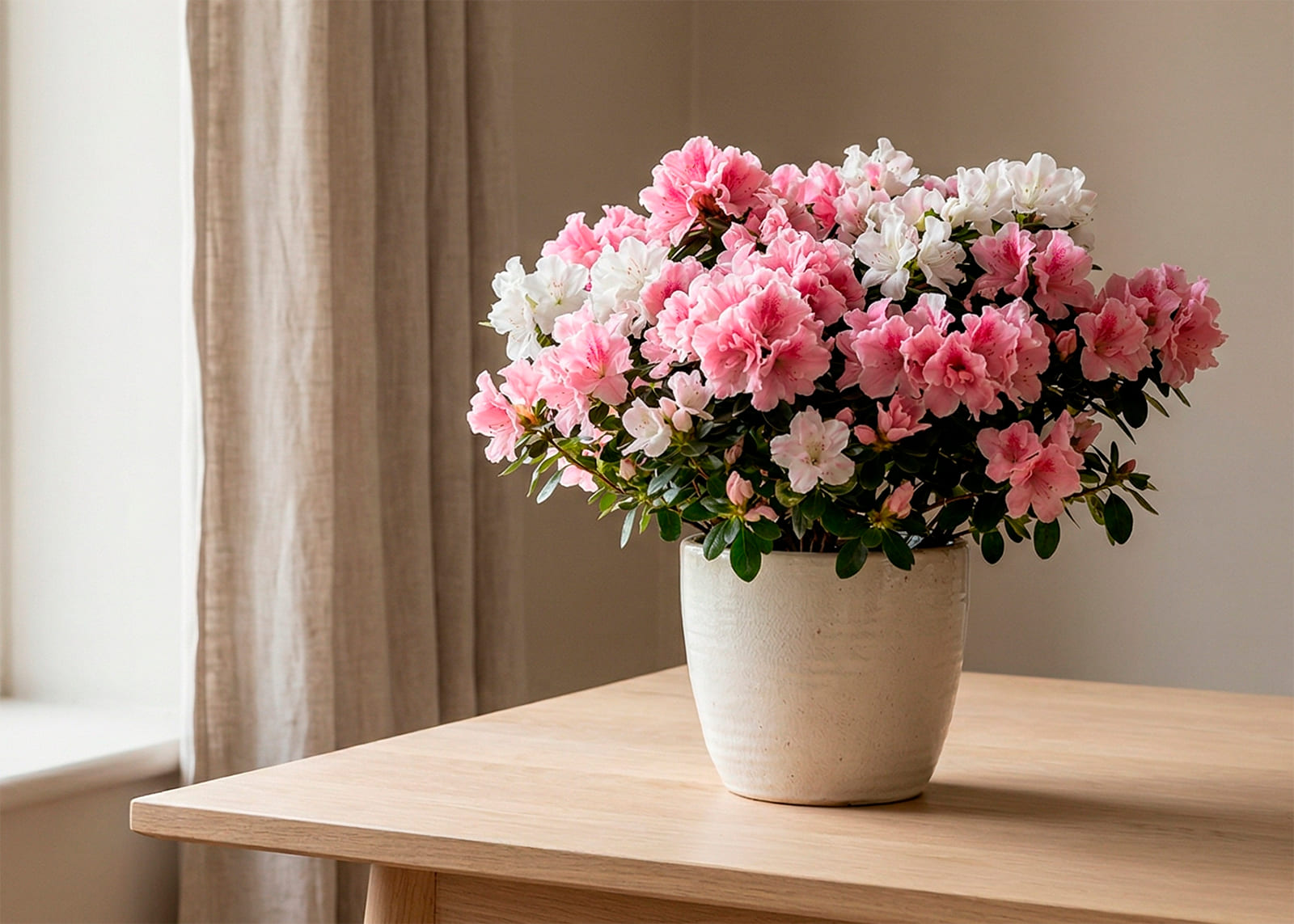
Azalea is not the most neutral option on this list, and that is exactly why it belongs here. During flowering, it looks rich, noticeable, and immediately draws attention. It is no longer just a small seasonal accent, but a full flowering plant that can become a visible part of the interior.
It is often chosen as a “living gift” instead of a bouquet. The logic is clear: azalea is perceived not as something that lasts for only a few days, but as a more substantial and considered option. It looks festive, yet still remains a plant for the home rather than a decorative gesture for a single evening.
Why it works well in spring
In spring, azalea is a strong option for those who do not want to limit themselves to cut flowers. If the goal is something with a longer presence in the interior, it feels more convincing than many seasonal bouquets. It is a good choice when the aim is to give not only color, but also a sense of continuity.
In addition, azalea works especially well visually in spring. After winter, its rich flowering looks particularly vivid, and the format of a potted plant feels both logical and appropriate. Not too formal, not too simple — exactly within the right range.
When it makes sense to choose azalea
Azalea is well suited for home use when the goal is a noticeable flowering plant rather than a temporary bouquet on the table. It looks good in bright rooms, on windowsills, on side tables, and in areas where a living color accent is needed.
It also works well as a gift, especially when it makes sense to choose something intended to last longer than just a few days. It is not the most universal option for every occasion, but it performs well when the aim is to give something more homelike, warmer, and less disposable.
What matters in care
Azalea prefers cool conditions and does not tolerate hot, dry air well. If placed near a radiator or in an overly warm spot, the plant quickly loses freshness and decorative value. It is better to choose a bright place without overheating.
Watering should be regular, but careful. The soil should not dry out completely, but overwatering is also not suitable. Azalea is sensitive to care routine, so it is better not to treat it on a “forgot it, then overwatered it” basis. The more even the conditions, the better it looks.
How to choose spring flowers and plants
What to choose as a gift
If you need a gift, it is worth understanding first not “what is fashionable right now,” but what kind of effect is actually needed. For a light and universal gesture, tulips, daffodils, or freesias usually work best. They are easy to understand, appropriate, and do not require a complicated occasion. If something more expressive is needed, then peonies, ranunculus, or anemones are the better direction.
The format of presentation also matters. A bouquet is more convenient when the gift should be simple and ready immediately. A potted plant works better in cases where something more homelike and longer-lasting is needed. At that point, not only the visual effect matters, but also whether the person will be comfortable taking care of it.
What to choose for home
For home use, it is better to look not only at beauty at the moment of purchase, but also at how the flowers or plants will live in a specific space. If a quick spring accent without extra care is needed, tulips, freesias, or daffodils will work well. If the goal is longer-lasting flowering, then primroses, muscari, hyacinths, or azalea are the more practical choice.
It is also useful to consider the interior itself. In smaller spaces, compact plants and lighter bouquets usually work better. In a larger room, peonies or a more noticeable flowering azalea can be used successfully. The main thing is not to choose something overly striking for a place where it will feel random or interfere with everyday use.
What lasts longer: cut flowers or a potted plant
In terms of lifespan, a potted plant almost always outlasts cut flowers. But that does not mean it is automatically better. A bouquet serves a different purpose: to create an immediate visual effect, decorate a space, and work as a gift without additional obligations. In some cases, that is more than enough.
A potted plant is a longer-term option, but expectations are different as well. It needs to be placed in a suitable spot, watered, and monitored. That is why the choice between cut flowers and a potted plant should not be made on the basis of “what lasts longer,” but on what is actually more convenient and suitable for the person.
How not to make the wrong choice
If you are unsure about someone’s preferences, it is safer to choose options that are more familiar and universal. Tulips, freesias, and daffodils are usually perceived more easily than heavily scented or highly distinctive plants. This is a good approach when a gift is needed without the risk of missing the right mood.
Brighter and more expressive options — peonies, anemones, azalea, hyacinths — are better when the goal is specifically to make an accent and there is a clear sense that such a choice will be appropriate. Flowers are more often suitable for a quick gift or a seasonal refresh at home. Plants are better for situations where a longer presence and a more living format are needed.
Summary: which spring flowers and plants are the easiest to choose without making a mistake
If you need a safe gift choice
The most universal options are tulips, freesias, and daffodils. They are seasonal, easy to understand, and do not create the feeling of an overly complicated choice. If the goal is a gift that is difficult to get wrong, it usually makes sense to start with them.
If a more expressive impression is needed, but without excessive heaviness, ranunculus or peonies are worth considering. This is already a more noticeable choice, but still clear and appropriate for spring.
If you want something for home
For home use, primroses, muscari, hyacinths, and azalea are especially practical. They are better suited to those who want not just a bouquet for a few days, but a living flowering plant in the interior with a longer lifespan.
If what is needed is specifically a cut option for a vase, tulips and freesias are the easiest choices. They fit naturally into everyday spaces and do not require overly elaborate presentation.
If both beauty and ease of care matter
If the goal is a balance between visual effect and reasonable practicality, tulips, freesias, primroses, or muscari are usually the best options. These are choices that do not look dull, but also do not demand too much attention immediately after purchase.
To put it very directly, the safest approach is this: for gifting — tulips or freesias, for home — primroses or muscari, for a more noticeable impression — peonies or azalea. That is already enough to choose spring flowers and plants without a random purchase and without unnecessary hesitation.
-
10 Leading Flower Farms in Colombia
Colombia’s flower industry is far more diverse than its reputation for roses alone suggests. The ...
-
Top 10 Ecuadorian Rose Farms
Ecuadorian rose farms differ significantly in scale, cultivar range, post-harvest systems, and ex...
-
Low-maintenance indoor plants for home, office, and gifts
Choosing an indoor plant is easier when the space, light, watering routine, and people caring for...


Categories
Carnation Red
 Colombia
 Kenya
Kenya
Pink Floyd
 Ecuador