Hiring and Evaluating a Florist for a Flower Shop
Today, a florist is far more than someone who simply assembles bouquets. A skilled florist can shape both a space and its atmosphere, working with flowers as a creative medium. Floristry has become an established part of contemporary culture, accompanying important occasions ranging from weddings and corporate events to smaller but meaningful gestures. Demand for qualified professionals remains strong, while competition increasingly requires not only creative ability but also sound commercial skills.
The profession has evolved considerably. What was once primarily a craft passed from master to apprentice is now a distinct profession requiring in-depth knowledge of flowers, current design trends, and the practicalities of working with clients. A modern florist needs to do more than create arrangements. They must understand customer requirements, keep up with more sustainable working practices, and continue developing their expertise.
This article examines the principal qualities and skills that distinguish a successful florist and explains why they matter when working with customers and business partners.
How to Evaluate a Florist When Hiring for a Flower Shop
For a flower shop owner, a professional florist is someone who can handle flowers correctly, maintain quality standards, communicate effectively with customers, and manage the cost structure of an arrangement. For that reason, hiring decisions should consider more than the aesthetic quality of a portfolio. Work speed, technical knowledge, care in handling materials, and the ability to reproduce consistent results during a normal retail shift are equally important.
Unlike a florist who works primarily on custom projects, a retail florist regularly deals with a limited assortment, established price points, urgent orders, and the need to produce several arrangements in succession. In a multi-location business, the ability to follow shared standards is especially important so that customers receive comparable quality regardless of the store they visit.
| What to Evaluate | How to Assess It | Why It Matters in Retail |
|---|---|---|
| Construction technique | Practical assignment | Neat execution, structural stability, and overall presentation |
| Flower knowledge | Questions about storage, compatibility, and care | Reducing waste and preserving product quality |
| Speed | Producing several arrangements within a set time | Performance during peak periods |
| Communication | Role-playing a customer consultation | Identifying the customer's needs accurately and working within budget |
| Ability to follow standards | Creating an arrangement from a reference image or specification | Consistent results across multiple locations |
No single criterion should be assessed in isolation. Exceptional speed can come at the expense of care and material control, while an impressive portfolio does not necessarily demonstrate an ability to perform consistently in a retail flower shop.
Key Qualities of a Successful Florist
Creativity and Creative Thinking
Creativity is fundamental to the florist's profession. Without a creative approach, it is difficult to produce distinctive, memorable arrangements that reflect the mood of an occasion or establish an individual design language. Creative thinking also allows a florist to work across different styles, from traditional designs to more avant-garde work, and to develop effective solutions even when materials are limited.
For themed events, for example, the task is not simply to select attractive flowers but to create a coherent arrangement that reflects the color palette, concept, and atmosphere of the occasion. Florists who can adapt their style to the client's requirements are able to develop solutions ranging from wedding flowers to large-scale floral decor for a corporate event.
How to Evaluate a Florist's Portfolio and Practical Work
A portfolio demonstrates a florist's aesthetic level, but when hiring for a retail shop it is best supplemented with a short practical assignment. This allows an employer to assess not only the finished result but also construction technique, handling of materials, work speed, and the ability to stay within a specified budget.
Portfolios typically feature a florist's strongest or most complex work, so they do not always reflect everyday productivity. A practical assignment based on a defined assortment and price range is closer to actual retail conditions. The candidate needs to work with the flowers available, follow the brief, and produce a commercially viable result.
For an employer, this approach reduces the risk of hiring someone who performs well only within a narrow style. A test assignment also has limitations, however. An unfamiliar assortment, an unfamiliar workstation, or an excessively strict time limit can affect the performance of even an experienced florist. It is therefore more useful to assess technique, decision-making, and handling of materials rather than judging the candidate solely by the appearance of one bouquet.
Attention to Detail
In floristry, small details matter. The ability to notice and execute subtle elements accurately helps a florist create balanced, professionally finished work, particularly when producing complex arrangements for large events.
To develop this skill, florists benefit from regularly reviewing their own work. They should consider how the finished piece looks, whether the client's requirements have been followed, and whether the flowers have been used efficiently. Maintaining clear communication with clients also helps the florist understand expectations and refine each aspect of an order, from a small accent in a bouquet to the overall appearance of a decorated venue.
Emotional Resilience and Ability to Work Under Pressure
Floristry often involves working in demanding situations. Handling fresh flowers and living plants requires florists to make decisions quickly, respond to urgent orders, and communicate effectively with difficult customers. These pressures become particularly noticeable during seasonal peaks and major holidays, when production time is limited but quality expectations remain high.
Effective time management, established workflows, and reliable construction techniques help florists remain focused and maintain a steady pace. The ability to stay motivated and composed is also important for working through demanding periods without compromising professional standards.
Work Speed and Consistent Quality
In commercial floristry, maximum speed is not the objective in itself. What matters is the florist's ability to complete orders consistently at a practical working pace without a noticeable decline in quality. This is especially important for stores that handle high order volumes in the morning, evening, and during holiday periods.
Unlike competition or project-based floristry, where substantial time may be available for a single arrangement, retail stores operate with a continuous flow of orders. A florist must simultaneously consider bouquet shape, flower condition, the customer's budget, packaging, and the required completion time.
For a multi-location operation, predictable productivity makes it easier to schedule shifts and distribute orders among staff. However, treating speed as the only KPI can be counterproductive. Excessively rigid targets can increase mechanical damage to flowers, material overuse, and the number of arrangements that need to be remade. Performance should therefore be assessed by considering production time, quality, and product usage together.
Personal Qualities
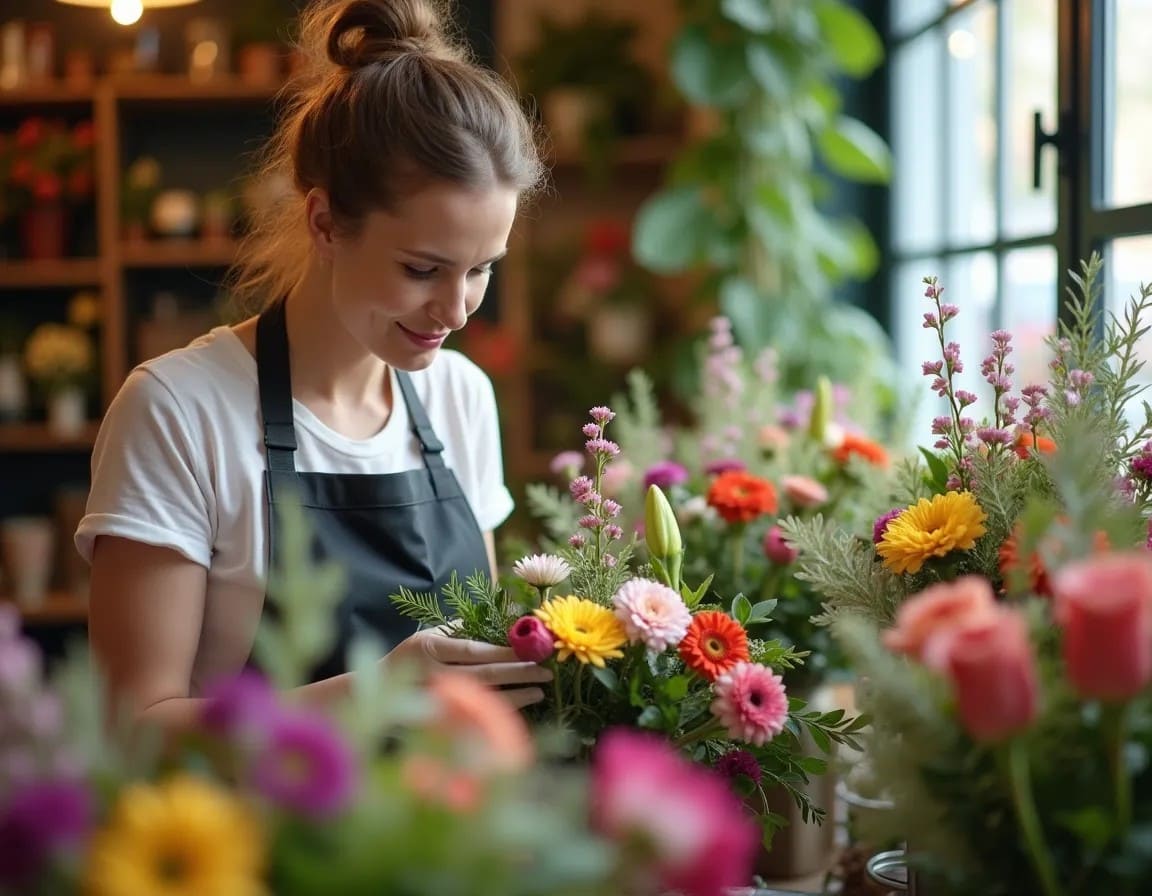
Personal qualities also play an important role in professional floristry because they affect service standards and customer trust. Patience helps a florist manage long hours of work on complex arrangements and remain attentive throughout each stage of bouquet construction, while a strong sense of responsibility supports timely and consistent order fulfillment. These qualities contribute to customer loyalty and a positive professional reputation.
Teamwork is equally important, since many projects, particularly large event installations, require coordinated work from several specialists. The ability to communicate and collaborate with colleagues helps maintain a cohesive design and ensures that the production process runs smoothly, which ultimately affects the quality of the finished project.
Professional Skills Every Florist Needs
In-Depth Knowledge of Plants and Their Characteristics
A capable modern florist needs professional-level knowledge of plant material because an understanding of flowers and foliage directly affects the quality and longevity of arrangements. Familiarity with vase life, care requirements, and seasonality helps prevent mistakes that can cause flowers to deteriorate prematurely and reduce the quality of the finished product. Knowing, for example, that roses and lilies have different water and temperature requirements allows a florist to build arrangements that maintain their condition for longer.
Customers frequently ask how long particular flowers will last, which flowers are best suited to a particular occasion, or how a bouquet should be cared for at home. To answer these questions effectively, a florist needs to explain basic care principles clearly and concisely and recommend flowers that match the customer's requirements. Competent advice builds trust and increases the likelihood of repeat business.
Receiving and Conditioning Cut Flowers
A strong florist should understand not only plant characteristics but also the basic principles of receiving, conditioning, and storing cut flowers. The quality of these processes directly affects how much product a flower shop can sell before it loses its commercial appearance.
After a shipment arrives, the florist needs to assess the condition of stems and buds, remove damaged material, recut stems correctly, provide appropriate hydration, and maintain suitable temperatures. These tasks distinguish practical knowledge of flowers from simply being able to identify a cultivar or create an attractive color combination.
For a retail operation, these skills help identify problems with a shipment early and reduce storage losses. There is no universal conditioning procedure for every flower, however. Roses, hydrangeas, tulips, and other crops have different requirements. Applying an overly standardized process without accounting for the characteristics of the individual species can actually shorten its decorative life.
Floral Design and Bouquet Construction Skills
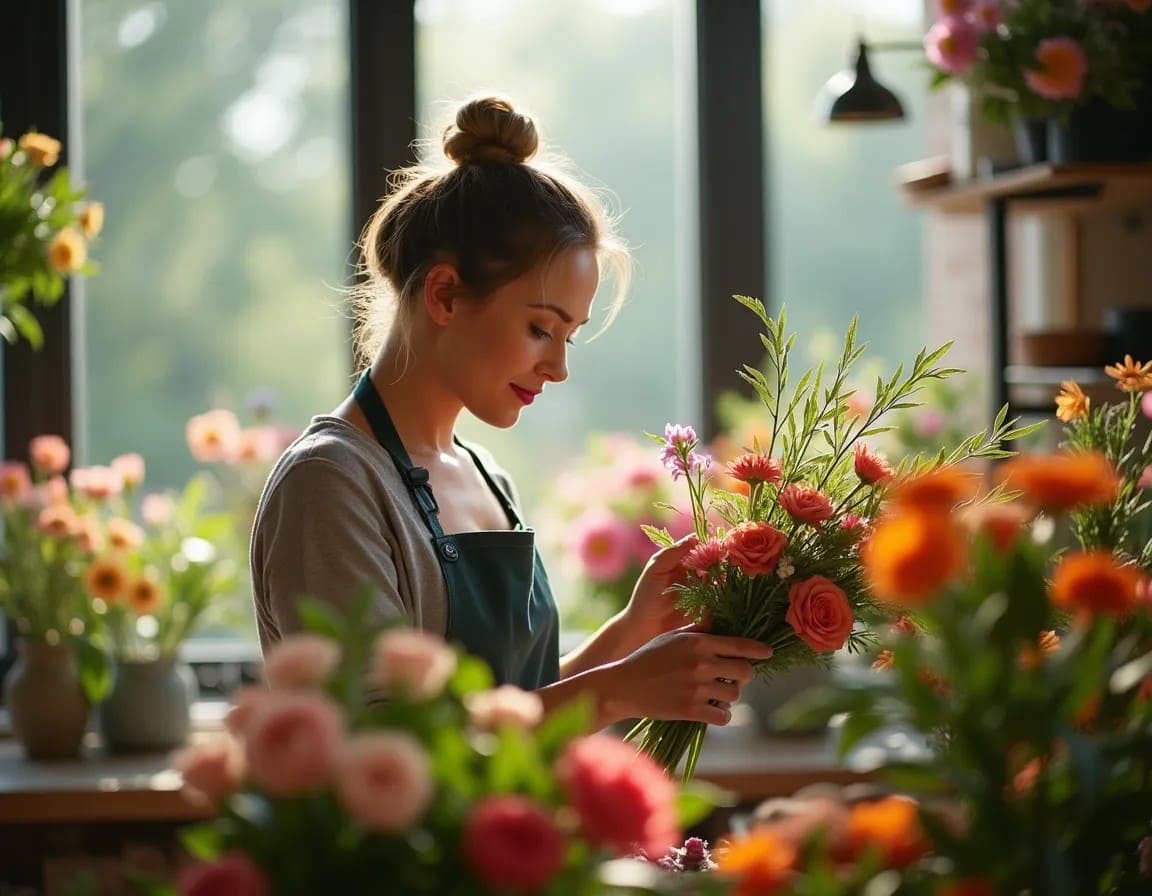
Floral design is one of the core skills of the profession and requires an understanding of color, texture, and form. These elements influence not only the visual appearance of an arrangement but also the mood it conveys. Pastel tones and lighter textures, for example, can create a softer, more romantic effect, while saturated colors and larger forms create a stronger visual impact.
A wide range of design styles can be used depending on the type of event and the client's preferences. Traditional, country-inspired, minimalist, and eclectic approaches can each be adapted to a specific occasion. A florist needs not only to recognize these styles but also to understand which elements best support the atmosphere of an event, whether it is a wedding or a corporate function.
Working to Standards and Reference Designs
For a florist working in a multi-location retail business, it is important not only to create original designs but also to reproduce an approved assortment accurately from a photograph, recipe, or technical specification. This helps maintain a comparable product across different store locations.
This approach differs from fully bespoke floristry, where the designer independently determines the form, composition, and proportions of an arrangement. In a retail chain, part of the assortment is usually standardized. Price point, primary flower varieties, size, packaging, and permitted substitutions may all be defined in advance.
The practical advantages include more predictable cost control, easier training for new employees, and the ability to sell the same product through several stores or an online catalog. Excessively rigid standardization, however, can limit a florist's professional judgment and make it harder to respond to seasonal changes in availability. A useful standard should therefore define the essential characteristics of the product while providing clear rules for appropriate flower substitutions.
Communication Skills and Customer Service
One of the key factors in professional floristry is the ability to communicate effectively with customers. Trust and mutual understanding help build long-term relationships, particularly with corporate clients and repeat customers. A florist should be able to identify the customer's preferences accurately, recommend options that suit the customer's budget and expectations, and provide confident professional guidance when required.
Effective communication also requires openness to questions and close attention to the details of each order. Demonstrating genuine interest in the customer's requirements helps create a sense of attentive service, which can strengthen loyalty and contribute to positive reviews of the business.
How to Evaluate a Florist's Customer Service
A good florist does more than simply take an order. They quickly establish the occasion, preferences, budget, and any constraints before offering several realistic options. For a store owner, this is one of the most important skills because the quality of the consultation directly affects both the likelihood of a purchase and how closely the finished arrangement meets the customer's expectations.
A professional consultation is different from routine upselling. The florist should be able to explain the differences between options, recommend an appropriate substitute for an unavailable flower, and adjust the composition to fit the customer's budget without making the customer feel pressured.
For a retail business, this makes it easier to work across different price segments and reduces situations in which the finished arrangement does not match the buyer's expectations. At the same time, aggressive targets for average transaction value or add-on sales can reduce the quality of customer consultations. Commercial performance should therefore be evaluated alongside customer feedback, returns, and repeat purchases.
Business Skills and Sales Management

In addition to creative expertise, a good florist benefits from basic business and sales-management skills, particularly when working independently or aiming to take on responsibilities beyond order production. One important area is inventory management. An experienced florist accounts for seasonal changes in demand to ensure sufficient availability during peak periods while avoiding excessive stock during slower months. In winter, for example, longer-lasting flowers such as carnations and roses may be in greater demand, while spring assortments shift toward seasonal tulips, daffodils, and other spring flowers.
Assortment planning can be improved considerably by using a structured product matrix for flowers, particularly when a florist is responsible for purchasing. This approach organizes flowers into categories according to seasonality, demand, and cost, making inventory easier to manage and purchasing more efficient. Direct purchasing through platforms such as Flora Market can also allow florists to control assortment and product quality themselves while streamlining direct sourcing from growers.
Accurate cost calculation is another important capability for florists who take on commercial responsibilities. By accounting for material costs as well as purchasing, transportation, packaging, and storage expenses, a florist can set commercially competitive prices for bouquets and arrangements while supporting the profitability of the business.
Controlling Cost of Goods and Waste
A commercial florist needs to understand how day-to-day design decisions affect the cost of an arrangement, flower usage, and subsequent waste. This becomes particularly significant in a multi-location business, where a small difference in material usage across a high volume of orders can result in a substantial difference in overall costs.
Unlike bespoke work, where bouquet composition can be changed freely to achieve an artistic objective, a retail store generally operates within defined price categories. The florist therefore needs to account for flower purchase costs, stem counts, packaging, and approved substitution options.
The ability to use remaining inventory effectively and suggest appropriate substitutions can reduce losses without compromising product quality. Minimal waste should not become an objective in itself, however. Attempting to use every remaining stem can reduce the visual quality of an arrangement or result in flowers being sold with insufficient remaining vase life. For the business, the relevant objective is a balance between product loss, quality, and actual margin.
The Importance of Continuing Education and Professional Development
Keeping Up with New Trends and Techniques
Floristry is a dynamic field in which trends change from season to season, and successful florists need to stay informed in order to meet evolving customer expectations. These developments can involve design styles and color palettes as well as new techniques, combinations of flowers and textures, and adaptations to cultural and seasonal preferences.
In recent years, for example, dried flowers have become more common in wedding bouquets, where florists combine them with fresh flowers to create layered arrangements that retain their form and color for longer. Another trend is the use of seasonal and locally grown flowers, which can reduce environmental impact while reflecting the natural character of a region. Spring bouquets often feature bulb flowers such as tulips and daffodils, while summer designs may incorporate meadow flowers and grasses for a lighter, more natural appearance.
To remain competitive, florists regularly attend workshops and professional training programs and participate in specialist exhibitions and festivals. International events such as Floriade and the Chelsea Flower Show provide opportunities to see work by established floral designers and observe new approaches to composition and presentation. Online courses and webinars have also become common, particularly for techniques that can be difficult to learn independently, such as vacuum cooling or methods designed to improve flower longevity during transportation.
Each form of training can broaden a florist's professional capabilities and introduce new approaches, which is particularly important when clients are looking not only for well-executed floral work but also for distinctive design solutions.
Sustainable Practices and Environmental Responsibility
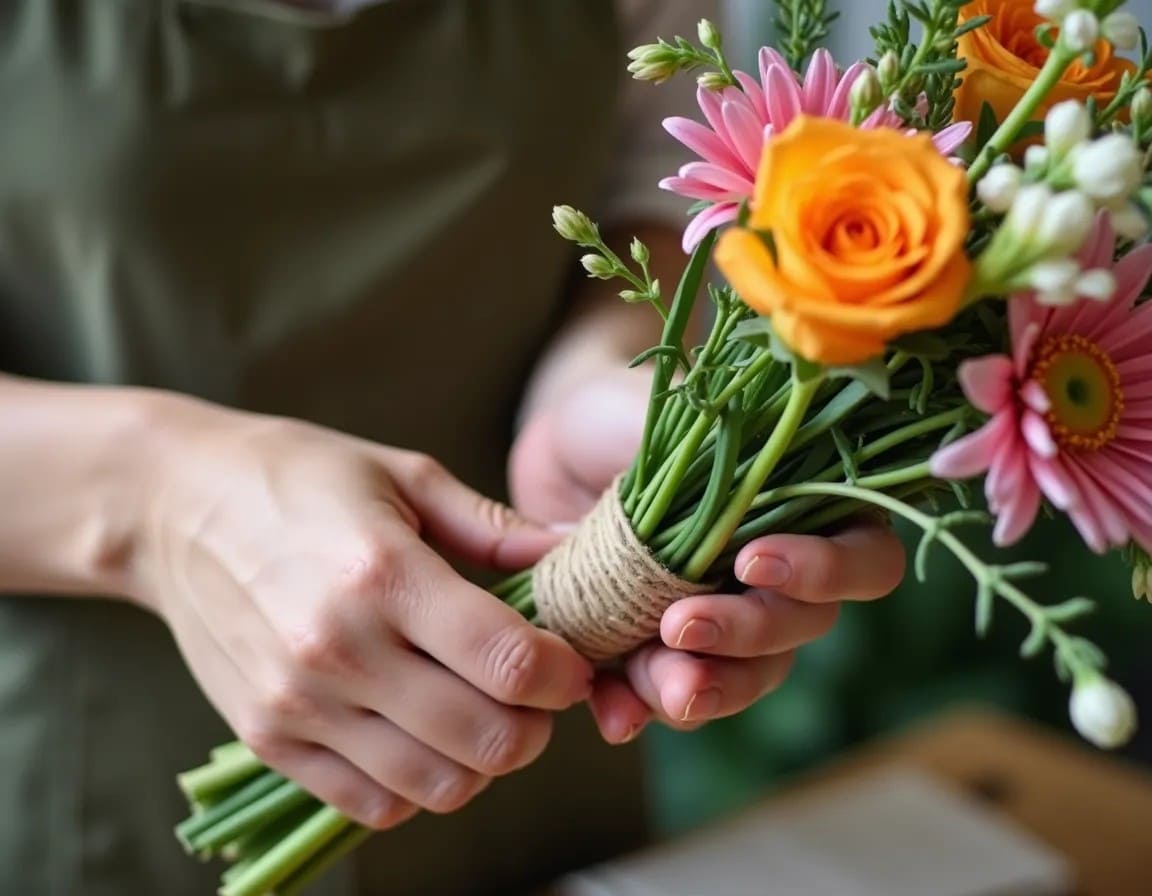
In recent years, environmental sustainability has become increasingly relevant not only to businesses but also to the day-to-day work of florists. As awareness of environmental impact grows, customers are more likely to ask about bouquets and arrangements made with lower-impact materials and more sustainable practices. Some customers, for example, may ask whether elements of an arrangement can be replanted after an event or whether flowers can be presented without plastic wrapping.
This means florists need to understand how to select materials that are both suitable for the design and more responsible from an environmental perspective. Biodegradable packaging and recycled paper are practical ways to reduce waste. Instead of conventional plastic film, a florist may offer natural linen ribbon or ribbon made from recycled cotton, making environmental considerations part of the company's working practices.
Florists should also understand which plants can be reused after an arrangement has served its initial purpose. Succulents, for example, remain presentable for long periods and require relatively little care, allowing them to be incorporated into a bouquet or arrangement and later replanted in a pot by the customer. Approaches of this kind can reduce waste while also demonstrating that the business offers practical products aligned with contemporary expectations around sustainability.
Conclusion
The florist's profession requires considerably more than the ability to assemble bouquets. A successful florist combines a range of qualities and practical skills that enable them to work effectively and deliver consistently high-quality products. Creative thinking, attention to detail, and the ability to work under pressure help florists handle varied tasks, from complex arrangements to urgent retail orders.
The combination of creativity, in-depth professional knowledge, and strong customer-service skills is what makes a florist valuable within the floral industry. Environmental responsibility and a commitment to ongoing education also help florists remain current and offer customers solutions that reflect evolving professional and sustainability standards.
Anyone seeking to build a successful career in floristry can continue developing both personal and professional capabilities over time. Ongoing improvement, attention to changes in the industry, and responsible use of materials help florists remain relevant while producing work that meets the expectations of modern customers.
-
10 Leading Flower Farms in Colombia
Colombia’s flower industry is far more diverse than its reputation for roses alone suggests. The ...
-
Top 10 Ecuadorian Rose Farms
Ecuadorian rose farms differ significantly in scale, cultivar range, post-harvest systems, and ex...
-
Low-maintenance indoor plants for home, office, and gifts
Choosing an indoor plant is easier when the space, light, watering routine, and people caring for...

Categories


 Kenya
Kenya


Playa blanca
 Ecuador

Pink Floyd
Ecuador


Carnation Red
 Colombia